Kitchen Notes
A guide to building a no-stress dinner party menu
Hosting people for dinner is a thing we did with great anxiety in our twenties and with great calm in our forties. The calm did not come from getting better at cooking. It came from getting better at choosing what to cook.
Here is the structure we settled on. It is unglamorous. It is also bulletproof. We have hosted twenty, thirty, fifty dinners on it and almost every one of them has been a good night.
The two rules behind the menu
Everything that follows comes from two principles. If you only take these away, you have what you need.
Rule one: the host should be at the table. A dinner where the host is stuck in the kitchen while guests sit awkwardly in the dining room is not a dinner party — it is a small restaurant. Build the menu so that you sit down with your guests for most of the evening.
Rule two: do everything you can do in advance, in advance. Pasta water can be in the pot before guests arrive. A salad dressing can be in the bowl. A dessert can be in the fridge. The fewer things you have to do at 8:45pm, the better your party.
The structure
We use a three-course structure: a make-ahead starter, a pasta main, a fridge-cold dessert. Each of these is designed for a different reason.
Course 1 — Something already on the table when guests arrive
A platter, board, or composed dish. Cheese, charcuterie, olives, marinated vegetables, dips, warm bread. Nothing that needs to be served hot. Nothing that needs assembly in the kitchen once people have arrived.
The job of course one is to give people something to eat the moment they walk in, while you pour them a drink and take their coats. It is also the job of course one to be the conversation starter — a small unusual cheese, a homemade dip, an interesting olive — so the social temperature warms up without you having to do the warming.
Lay it out 30 minutes before guests arrive. Cover with a tea towel. Reveal when the doorbell rings.
Course 2 — The pasta main
Pasta is the perfect dinner-party main course for three reasons.
First, it scales. A pot of pasta and a wide pan of sauce will feed four people, eight people, or twelve people, with the same effort and the same kit. Where a steak-and-three-vegetables dinner is a logistical exercise multiplied by every guest, a pasta dinner is one act, repeated.
Second, the cooking time is predictable and quick. Nine to twelve minutes. You can drop the pasta into boiling water the moment everyone is seated and have it served in fifteen minutes. There is no anxious checking, no temperature probes, no resting time.
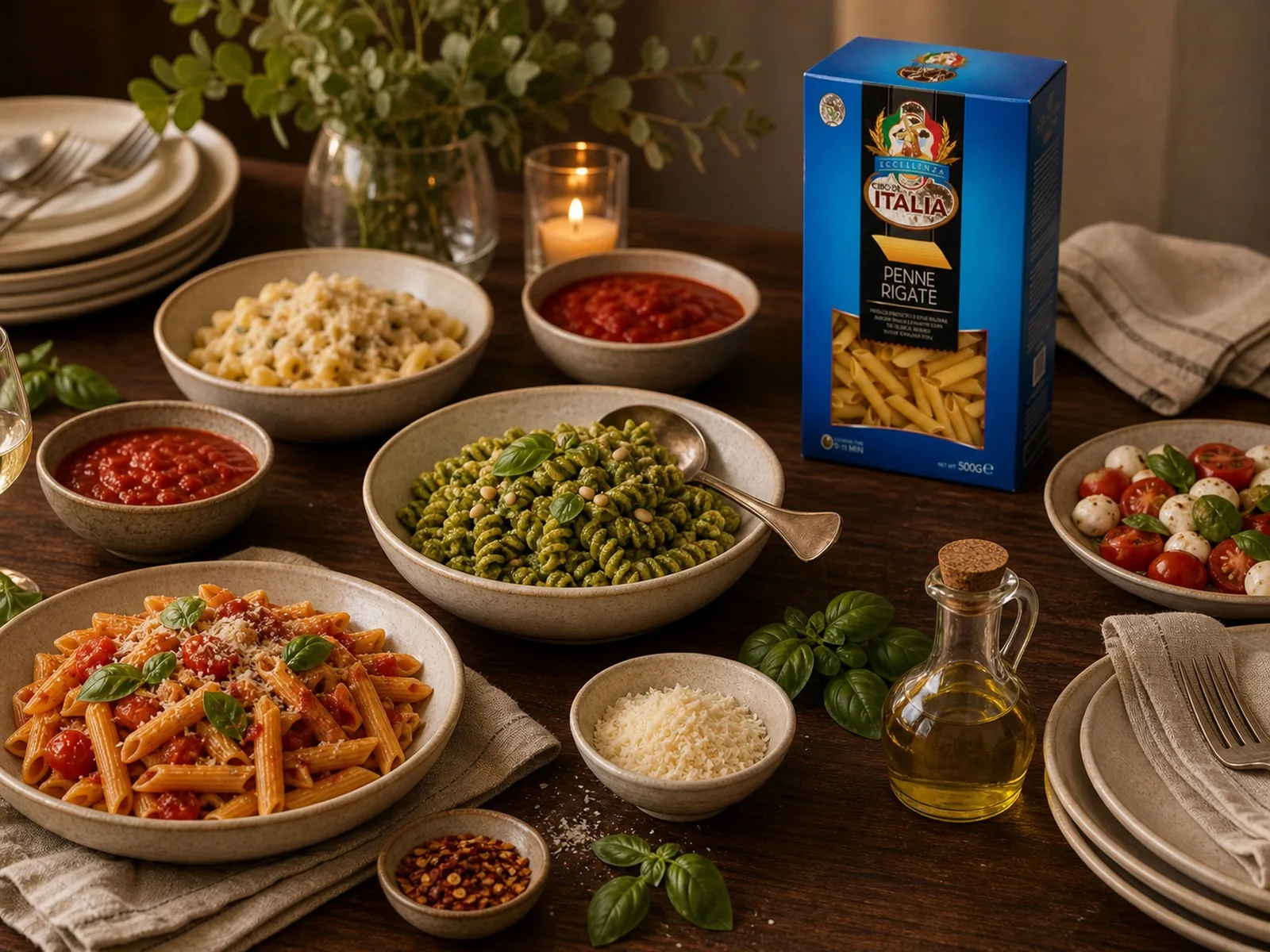
Third, it absolutely loves a wide pan. A pasta dinner served from a big shallow pan or a baking dish in the middle of the table is one of the most warmly inviting acts in cooking. There is no plating to ruin. There is no fancy presentation to apologise for. There is just a beautiful pan of pasta and a stack of bowls.
The pasta dishes we go to most often for dinner parties:
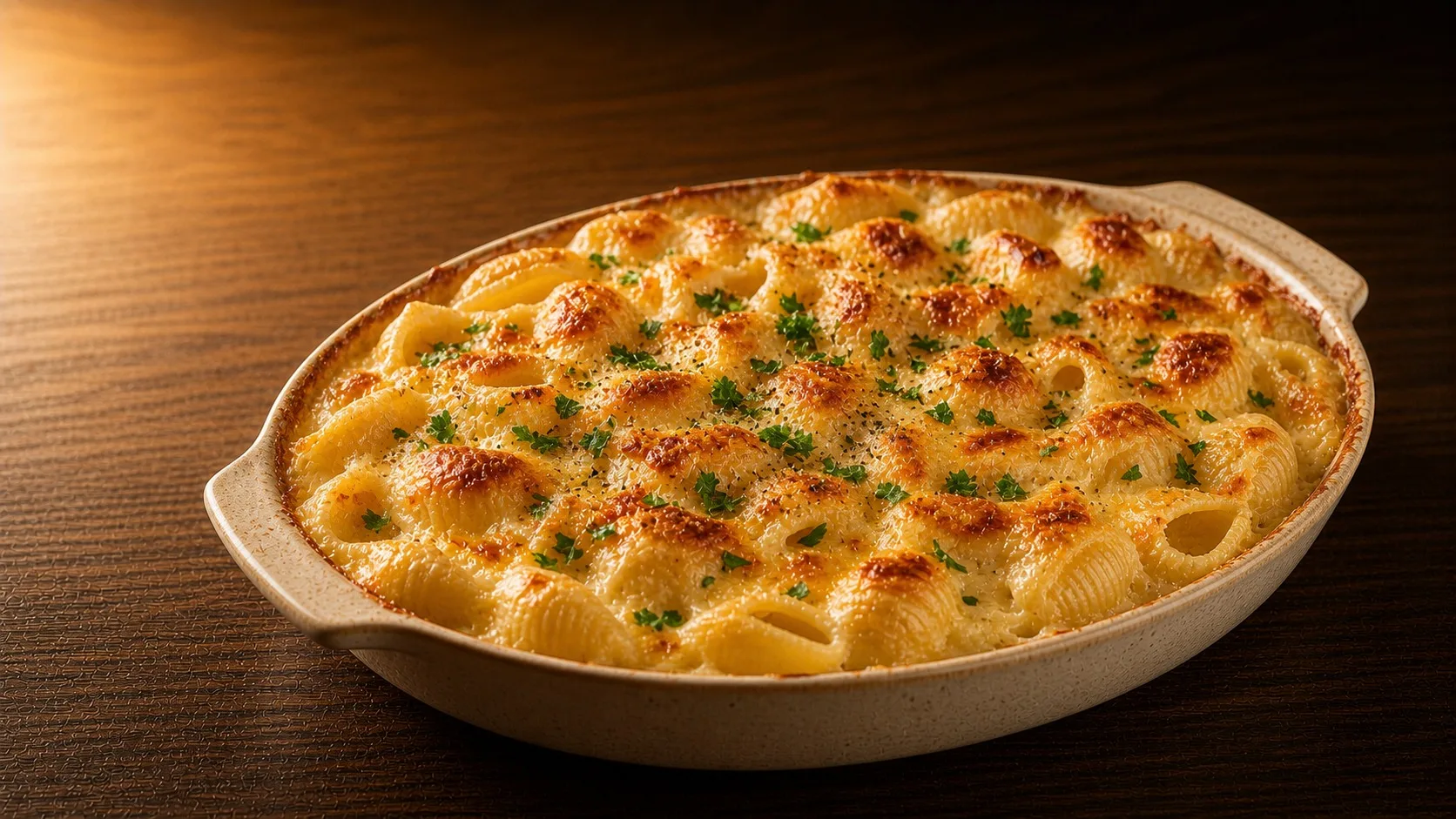
- Cheesy Conchiglie Casserole — a bake. Can be assembled an hour in advance and put in the oven 35 minutes before serving. Comes to the table as a glorious bubbling dish.
- Sausage Ragu Fusilli — the ragu can be made the day before and improves overnight. Cook the pasta and combine on the night.
- Slow-Simmered Tomato Pasta — the sauce simmers while guests arrive; the pasta cooks once everyone is seated.
- Loaded Conchiglie with Sausage & Spinach — a deeply hearty bowl, scaled up beautifully for a crowd.
If you are serving guests with dietary needs, our Gluten-Free Penne Rigate Bake lets the whole table eat the same dish — no one sits out.
Course 3 — A dessert from the fridge
The cardinal sin of dinner parties is a hot dessert. By the time you’ve cleared the main course, you’ve been on your feet for forty minutes, the guests are happy and slightly tipsy, and the last thing you want to be doing is plating a souffle.
Cold desserts win. A tray of tiramisu cups made the morning before. Panna cotta set in the fridge from the night before. A bowl of mascarpone with macerated berries. Sliced figs with honey and pistachios. A platter of cheese and dried fruit and chocolate.
Cold dessert means you can clear the plates, put the kettle on, and have dessert in front of guests in three minutes flat. You also get to sit down again.
What we don’t serve
A few things we have learned not to bother with.
- A starter that needs hot plating. This means a salad with seared scallops, or a soup served in matching warmed bowls. Lovely, but it puts you in the kitchen at the moment you should be greeting guests.
- A main course of individually plated proteins. Steaks, chicken breasts, lamb cutlets — each one timed, each one resting, each one plated separately. You can absolutely do this, but you’ve signed up to be the chef of the evening, not the host.
- Anything that requires last-minute frying or grilling. The smell of frying meat at 9pm changes the mood of a dinner. Use anything that braises, bakes, or simmers in the background instead.
The timeline that actually works
For a 7:30 arrival, 8pm dinner, here is the only timeline you need:
- Day before: make the ragu or assemble the bake. Make the dessert. Tidy the dining room.
- 5pm: lay the table. Set the pasta water in the pot (don’t turn it on yet). Arrange the starter platter, covered.
- 6:30pm: shower and change. The most important hour. Do not do anything in the kitchen.
- 7:15pm: turn on the pasta water. Pour a drink. Light candles.
- 7:30pm: guests arrive. Bring out the starter. Pour drinks. Sit down.
- 8:00pm: put the pasta in. Toss in the sauce. Serve. Sit back down.
- 8:45pm: clear plates. Bring out dessert. Sit back down.
- 9:30pm: coffee, mints, conversation. You are still at the table.
What this looks like for a Ramadan iftar gathering
The same structure with very minor changes:
- Course 1 becomes a date and laban tradition, plus a platter of small bites.
- Course 2 stays as the pasta main — a Chickpea & Tomato Pasta Stew or Hearty Bean & Pasta Soup lands beautifully on the iftar table and feeds many.
- Course 3 stays cold — Arabic sweets, fresh fruit, a panna cotta.
The structure travels because the principles travel. Make-ahead. Big, shared dishes. Cold dessert. Host at the table.
The takeaway
A no-stress dinner party is not a less ambitious dinner party — it is a more thoughtful one. The work has been moved earlier so that the evening can be spent on your guests rather than your stove. Pasta is the structural reason this works: a single big, generous dish in the middle of the table, served with warmth, that scales to whoever turned up and lets you sit down with them.
That is what we mean when we say our pasta is made for the way your family eats. Sometimes the family is bigger than usual, and that is just as good a reason.
Cibo di Italia Conchiglie Rigate
500g · Cooks in 10–12 min
Cheesy Conchiglie Casserole
50 min Easy