Kitchen Notes
What's the difference between our three ranges — and which is right for your kitchen?
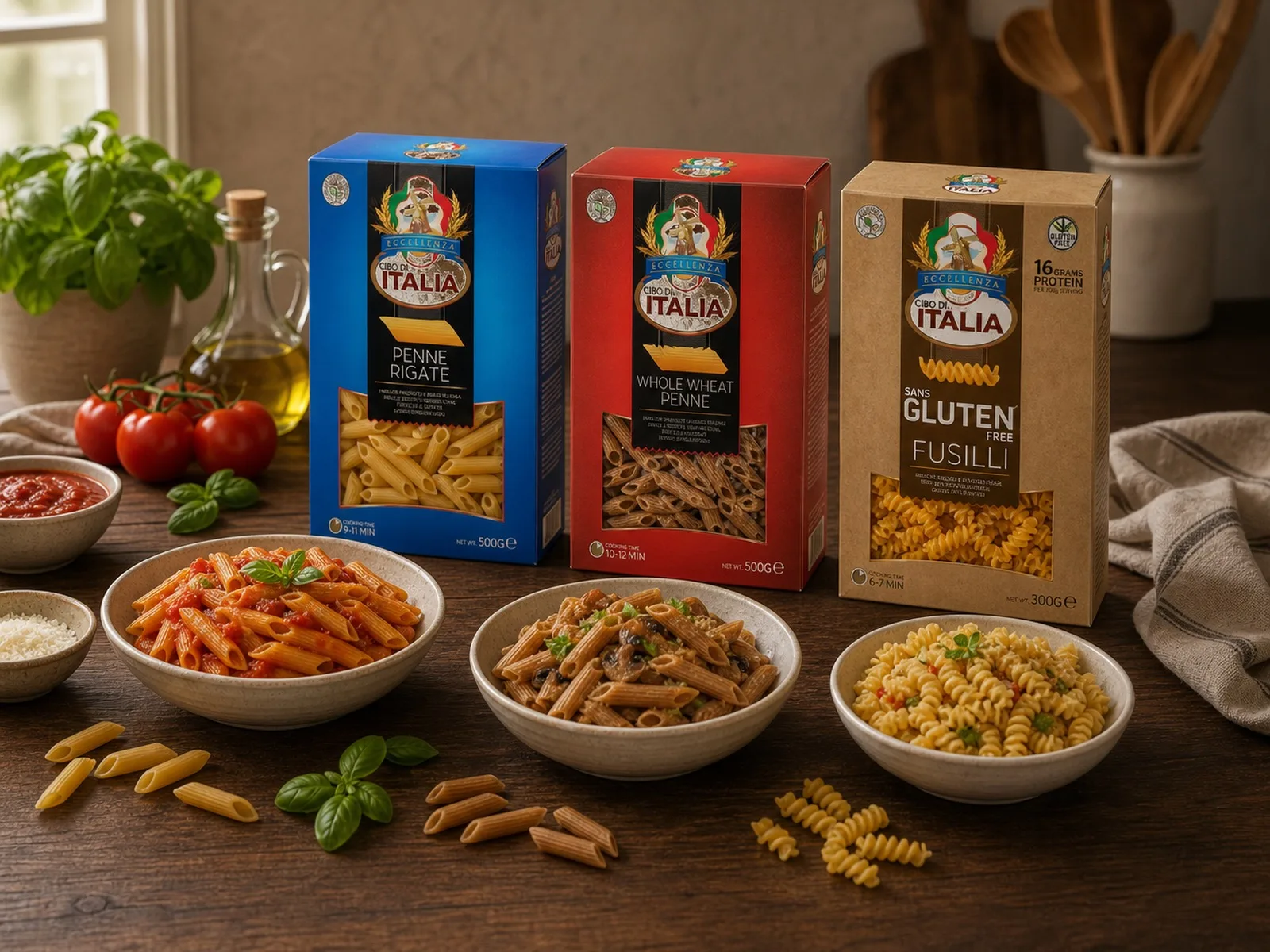
“Three ranges, every kitchen” is the line on the front of every pack and the headline on this site. It is also a sentence that, if you are standing in front of three shelves of pasta with a kid asking for ice cream and a basket full of groceries, is not very helpful. So this is the longer answer.
We make three ranges because we have decided that no single pasta belongs in every kitchen — but between the three of them, every kitchen has something that works. Here is each range, what it is, who it suits, and how to pick.
Classic — the everyday workhorses
Made from: durum wheat semolina, the gold-standard ingredient for dry pasta. Cooks evenly, holds its bite, takes nearly any sauce.
Shapes: Macaroni, Fusilli, Penne Rigate, Conchiglie Rigate. All four are short, sauce-friendly shapes designed to handle the realities of weeknight cooking — quick to plate, easy for children, generous when you scale them up for guests.
Bite and flavour: the springy, neutral al dente that most people picture when they hear “pasta.” Gold-coloured. Holds shape on the plate.
Best for: every family who is not avoiding wheat. This is the range that does the most work in most kitchens — the default tomato pasta, the cream sauces, the cheesy bakes, the school-lunchbox cold pasta salads, the Sunday simmered ragus.
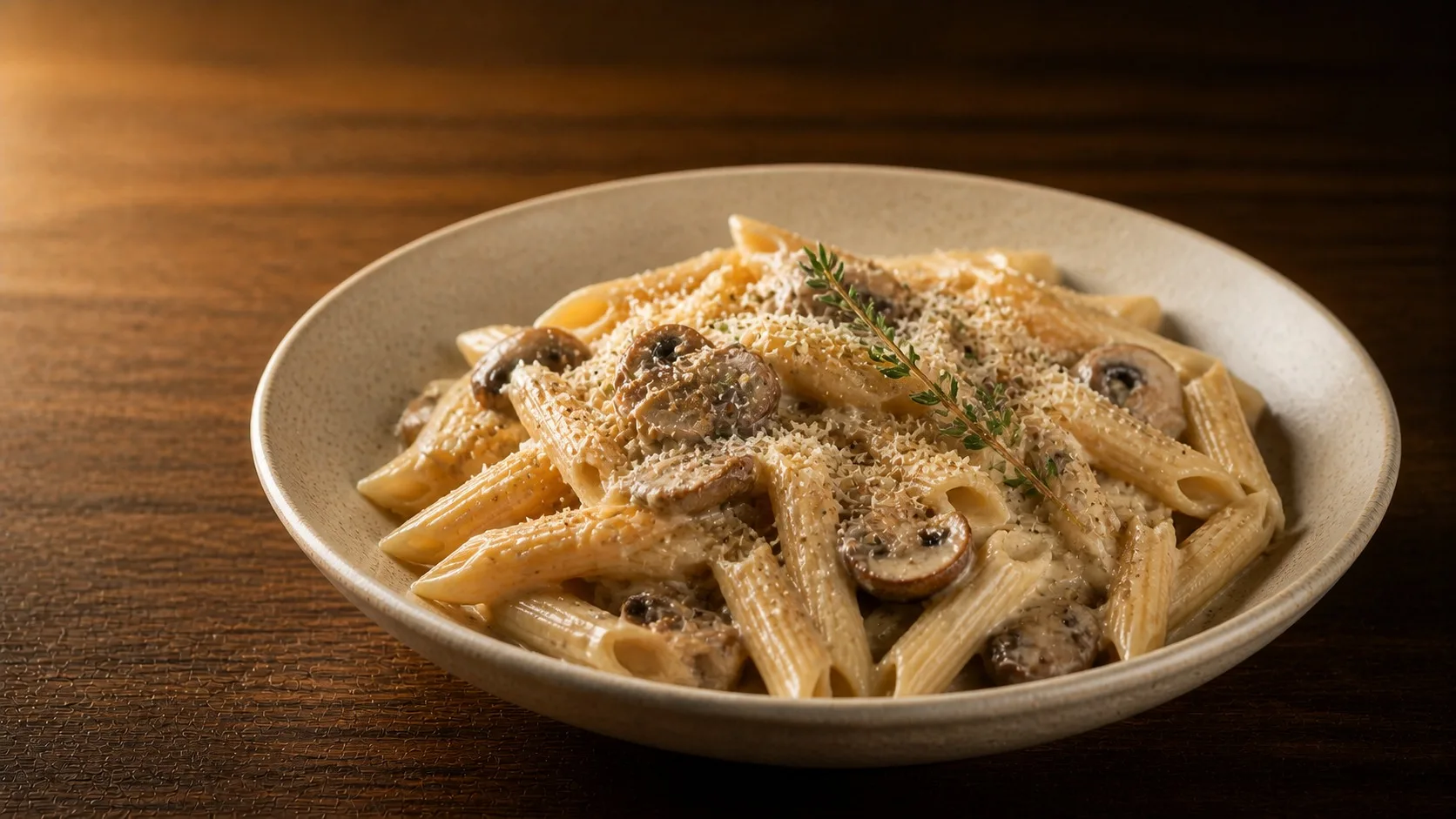
The recipe that shows it off: Creamy Mushroom Penne. Twenty-five minutes, glossy cream sauce, every ridge of the Penne Rigate doing its job.
If you only ever buy one Cibo di Italia pack, make it a Classic Penne Rigate. It will not let you down.
Whole Wheat — the same satisfying bite, with the whole grain in
Made from: durum wheat milled to keep the bran and germ in. Same wheat as the Classic range, just less stripped.
Shapes: Penne, Fusilli, Macaroni. Three of the four Classic shapes, in their whole-grain version. (No conchiglie in this range — for now.)
Bite and flavour: a deeper, more golden-brown colour. A slightly nuttier, slightly earthier flavour. The al dente bite is the same satisfying one as the Classic range — what changes is the flavour, not the texture. (We’ve written more about this in Whole wheat pasta vs regular pasta.)
Best for:
- Households that want more fibre and trace minerals in everyday dinners
- Cooks who like a pasta with its own flavour — one that holds its own against bold, garlicky, herby sauces
- Anyone making cold pasta salads (whole wheat holds its bite better when cooled)
- Families who appreciate a slightly more filling pasta and find Classic disappears faster than they’d like
Who it is not for: very young children who have only just got used to wheat pasta, and very nervous eaters. The slightly nuttier flavour is wonderful, but to a wary palate it can register as “different” before it registers as “delicious.” Easier to introduce when both pastas are already in the house.
The recipe that shows it off: Whole Wheat Pasta with Roasted Vegetables. Sheet-pan vegetables, garlic yoghurt, whole wheat penne. The deeper flavour of the pasta is the keystone.
Gluten-Free — for the gluten-free table that never wants to feel like it’s missing out
Made from: a high-protein blend of chickpea flour, brown rice flour, tapioca starch and pea protein. textured, ~16g of protein per 100g serving. No wheat. No gluten.
Shapes: Penne Rigate, Fusilli, Macaroni. Three shapes, intentionally the most versatile three — they cover almost everything a gluten-free household wants to cook.
Bite and flavour: the closest a gluten-free pasta gets to a wheat al dente. Tender at the centre, firm enough to hold sauce, with a faintly nutty, clean flavour. Cooked well, kids genuinely don’t notice the difference — and they’re getting more than twice the protein of a standard maize/rice gluten-free pasta.
Best for:
- Anyone in the household who has been diagnosed coeliac
- Anyone with non-coeliac gluten sensitivity
- Mixed households where one person needs gluten-free and the rest want to eat the same dinner — the gluten-free range is good enough that it can be the single pasta on the table
The honest caveat: gluten-free pasta has a slightly narrower al dente window than wheat. You’ll want to read Is gluten-free pasta as good as regular pasta? for the full method. The short version: plenty of water, taste from a minute before the pack time, finish in the sauce.
The recipe that shows it off: Gluten-Free Penne Rigate Bake. A real bake, not a compromise — the pasta firms beautifully on standing and the dish slices like a proper lasagne.
How to decide which to buy first
A quick decision tree:
- Someone in the household avoids gluten? Start with Gluten-Free Penne Rigate. Add a Gluten-Free Fusilli for variety.
- Standard weeknight family cook, no dietary needs? Start with Classic Penne Rigate. Add a Classic Macaroni or Fusilli to cover lunches and bakes.
- Health-conscious household, no dietary restrictions? Start with a Whole Wheat Penne, a Classic Penne Rigate, and a Classic Macaroni. The Whole Wheat earns its keep on weeknight dinners; the Classics cover bakes and kid plates.
- All of the above — mixed household? Honestly, one pack of each range covers nearly everything. They will all sit happily in the cupboard for a year.
How to switch between ranges in a recipe
Most of our recipes are written for a specific range, but they are designed to be range-flexible. As a working rule:
- Classic recipe → Whole Wheat: add 1–2 minutes to the cooking time. Expect a slightly nuttier finished dish. Best with bolder sauces.
- Classic recipe → Gluten-Free: cook 1 minute less than the pack time. Taste from 6 minutes onwards. Slightly more delicate handling when draining.
- Whole Wheat recipe → Classic: subtract 1–2 minutes from the cook time. Expect a slightly milder finished dish.
- Whole Wheat recipe → Gluten-Free: as above for Classic → Gluten-Free, plus a little less of the deep wheaty flavour.
What does not change between ranges
The basics. All three ranges:
- Need 4 litres of well-salted water per 500g (or 300g for gluten-free)
- Want a rolling boil before the pasta goes in
- Benefit from pasta-water finishing in the sauce
- Pair with the same logic of shape-to-sauce (covered in our pasta shape & sauce pairing guide)
The takeaway
Three ranges is not a marketing line we are pleased with — it’s a small operational promise. The promise is that whatever your family’s reason is for being at the table tonight (a weeknight rush, a dietary need, a craving for something hearty, a school lunch tomorrow), one of the three packs on the shelf is the right one. We are not the brand for the cook who wants twenty kinds of speciality everything. We are the brand for the kitchen that wants a small number of dependable packs and trusts each of them to do its job. That’s the whole thing.
Cibo di Italia Penne Rigate
500g · Cooks in 9–11 min
Creamy Mushroom Penne
30 min Easy