Kitchen Notes
Why dinner together matters more than what's on the plate
We sell pasta. So we have, you would think, a vested interest in saying that what’s on the plate matters. After years of cooking for our own families, our houseguests’ families, our recipe-testing families and the families of strangers we’ve cooked for at events — we have come to the opposite view. What’s on the plate matters surprisingly little. What matters is everyone being at the table.
This essay would have been impossible to write if we hadn’t first watched it work in our own homes. So we’re going to tell you what we noticed, and what we changed, and why our company starts every recipe with the assumption that someone is going to be eating it next to someone else they care about.
What “dinner together” actually does
There’s a body of research on this — sociologists have studied family meals for thirty years. What they find, again and again, in almost every culture they look at, is that a regular shared meal predicts a long list of good things in children: stronger vocabulary, better mental health markers, lower risk of disordered eating later, better school attainment. The numbers are consistent enough that even the most skeptical reviewers tend to conclude that something about the family dinner is doing real work.
What they have not been able to pin down, despite trying, is which specific element does the work. Is it the food? The conversation? The routine? The presence of a parent? The undivided attention? When researchers try to control for one factor, the effect just shifts to another.
Our best amateur reading of all this: the whole thing is the thing. Sitting down, looking at each other, eating the same food, being unhurried for twenty minutes — that bundle of small acts is what matters. You can’t unbundle them and keep the magic.
What it isn’t
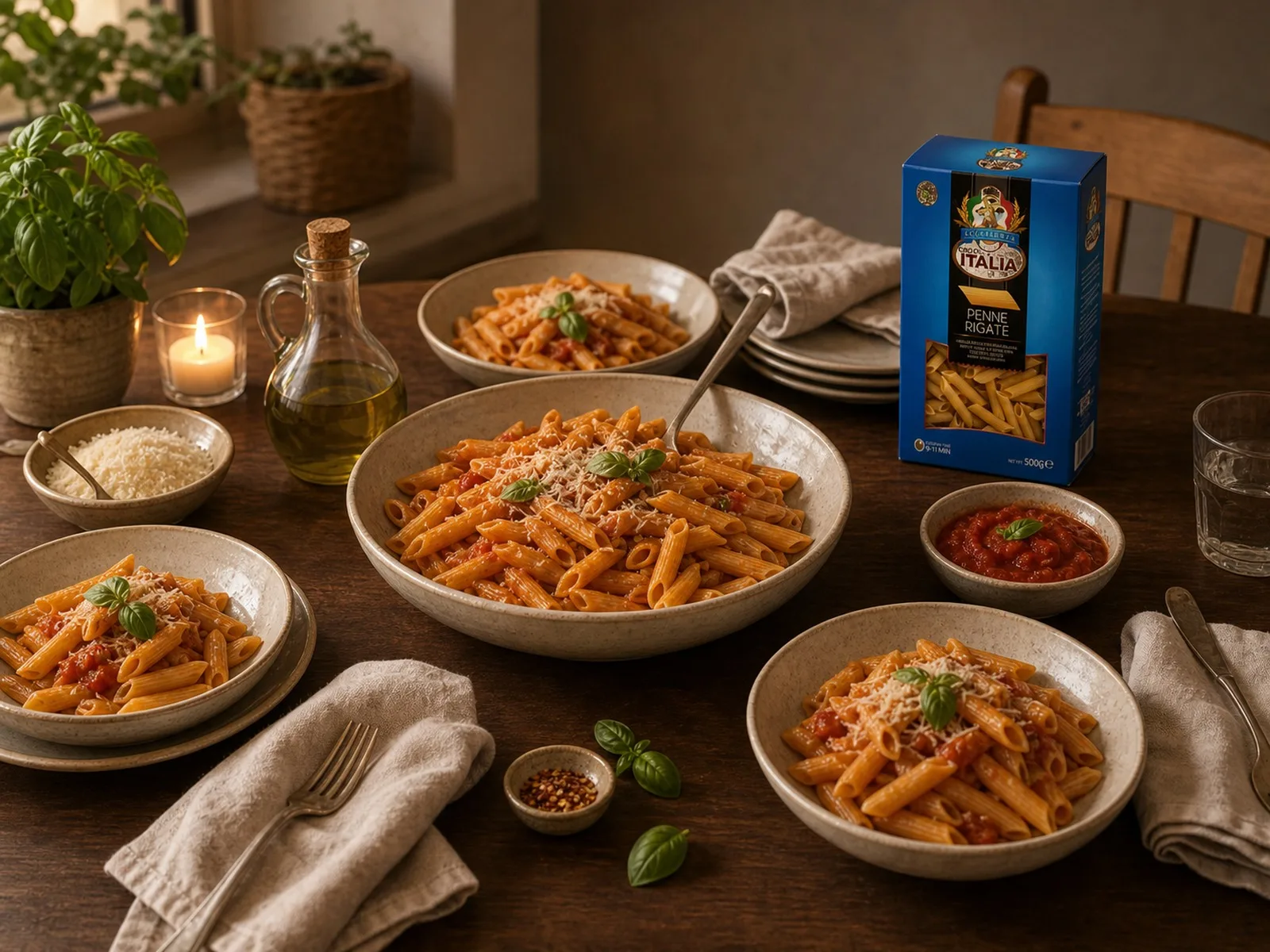
It is not the elaborate dinner. The Sunday roast, the dinner-party menu, the multi-course Saturday celebration — those are lovely, but they are not what the research is talking about. They are events. The thing we’re talking about is the boring, normal Tuesday — pasta in a bowl, three or four people at the table, nothing special happening, dinner served at the same time it was served the day before.
It is not the perfectly-balanced plate. Children do not learn nutrition because you put broccoli on their plate. They learn nutrition because they see you eat broccoli, talk about food in normal ways, and notice that food is something the household pays casual attention to. A bowl of pasta with vegetables in the sauce, eaten together, beats a more nutritionally complete plate eaten in front of a tablet on the sofa.
It is not the cooking effort. Some of the most psychologically valuable family meals we have eaten were tinned tomato pasta with cheese on top, made in twenty minutes after a hard day. Effort is not the point.
Why pasta is the right vehicle
We make pasta for a living so this is unsubtle, but it’s also true. Pasta solves nearly every barrier to dinner-together.
- It’s fast enough that it doesn’t require advance planning. Dinner-together fails when planning fails. Pasta routinely makes it from “no idea” to “served” in under thirty minutes. The window between “we should eat” and “we are eating” is small enough that the day doesn’t have time to derail it.
- It’s a single-bowl meal. No competing dishes, no negotiating who eats what. The bowl is the meal.
- It scales effortlessly. Three people, five people, a guest who arrived without warning. Add a handful of pasta, a splash more sauce, an extra plate. No menu reshuffle needed.
- It welcomes ranges of preference. The picky child eats their corner with butter and cheese. The teenager piles theirs with chilli. The adults sip their water and pass the parmesan. Everyone is having “pasta,” even though everyone’s bowl is slightly different.
We didn’t engineer pasta to fit these criteria — they’ve been true of pasta for a few hundred years. We just noticed that they are what the modern family meal actually needs.
A small case for being honest about it
There’s a temptation, when writing about family dinners, to make them sound idyllic. They are not idyllic. They are often messy. Someone is on their phone. Someone is upset about something at school. Someone refuses to sit down. The adult who has been cooking is irritable from cooking. The child who has been hungry for an hour is irritable from being hungry. Dinners that look from the outside like a magazine cover are nearly always staged.
The honest truth is that the value of family dinner is not in any single dinner. It is in the accumulation — the fact that the family eats together most evenings, even when most of those evenings are slightly awkward. The good ones are not what’s doing the work. The mediocre ones, in their dozens and hundreds, are what’s doing the work.
So: don’t try to make every dinner special. Try to make most dinners happen.
How to actually pull it off
A few unglamorous habits that we keep recommending to friends:
- Pick a default time and defend it. Our household defaults to 7pm. Sometimes it slips to 7:30. We do not let it slide past 8 without a real reason. If you don’t have a default time, dinner shifts later and later until it stops being a thing the whole family does.
- Eat the same food. Resist the urge to make alternative dinners for different family members. One pot, one sauce, one bowl per person. Letting the small person have their corner sauce-free or cheese-only is fine — that’s still one meal.
- Phones off the table. Yours included. The single biggest predictor of whether a family dinner does the work it can do is whether parents are present. If yours is on the table, theirs has permission to be too.
- No TV in the background. Music is fine if it’s playing already. A screen actively pulling attention is not.
- Twenty minutes is enough. We are not asking for an hour. The dinner just needs to be long enough to actually be a dinner. Twenty minutes at the table, undistracted, four nights a week, is more powerful than ninety minutes once a month.
Where pasta nights fit in our brand
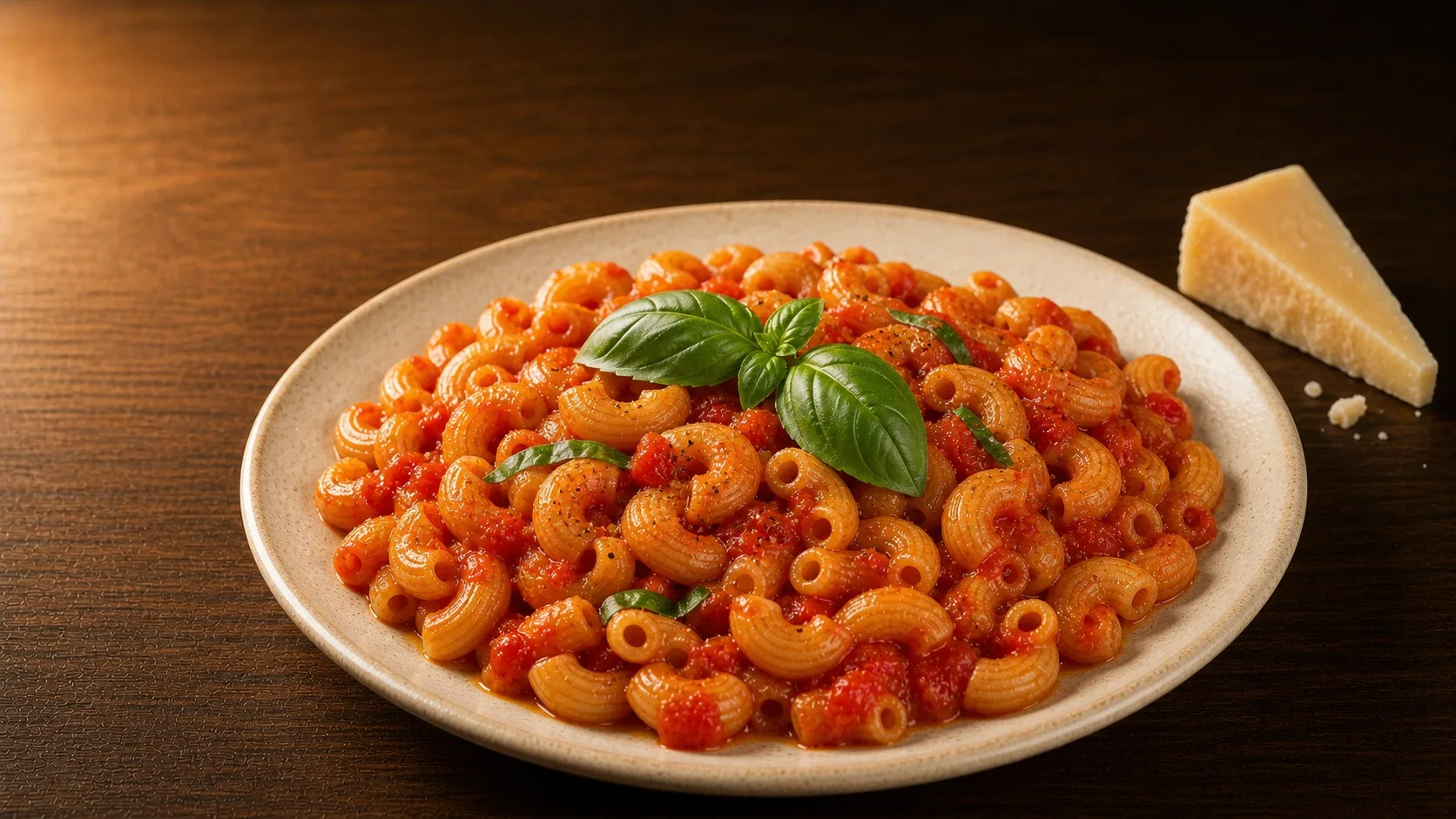
We didn’t write the Classic Tomato & Basil Macaroni recipe to be a clever recipe. We wrote it because, in our recipe-testing households, it is the dinner that landed on the table on the bad days. It’s pasta in a bowl. It’s not trying.
Every other recipe on this site was written by people who believe that the same thing is true. Some are fancier. Some take longer. Some need a Sunday afternoon. None of them are the point. The point is the next dinner. The boring one. The Tuesday.
The takeaway
If you wanted permission to stop worrying about whether your family dinners are good enough, here it is. They don’t need to be impressive. They need to happen. A bowl of pasta and the people you love around the table is, statistically and emotionally, doing more work than a complicated plate of food eaten alone.
We make pasta for that reason. Not because we think pasta is the best food in the world — though we have opinions about it — but because pasta gets dinner on the table when nothing else will. And dinner on the table, with your family, is the whole thing.
Cibo di Italia Macaroni
500g · Cooks in 8–10 min
Classic Tomato & Basil Macaroni
25 min Easy