Pasta 101
Penne rigate vs penne lisce: why ridges matter
In one line
Penne rigate is ridged. Penne lisce is smooth. The shape is otherwise identical — a tube cut on the diagonal at each end. For nearly every home cook making nearly every sauce, you want the ridged one.
What “rigate” and “lisce” mean
The Italian word rigate means “ridged” — small parallel grooves running along the length of the tube. Lisce means “smooth” — the same tube shape without the grooves.
The two are siblings, not different shapes. They come from the same dough and the same cut. The only difference is whether the metal mould the pasta is pushed through has those ridge-cutting grooves or not.
Why ridges aren’t decoration
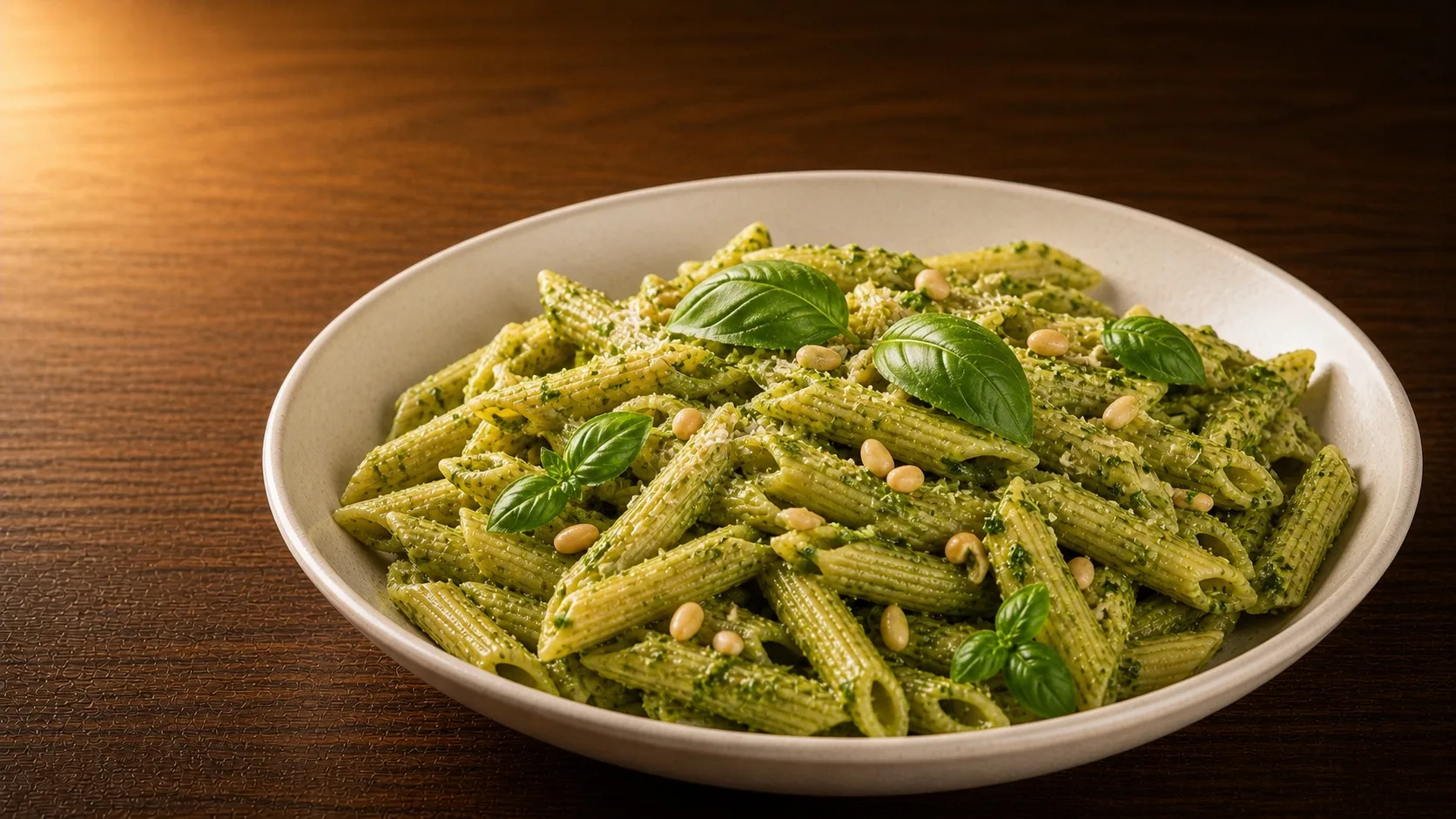
The job of a pasta shape is to deliver sauce to your mouth. Smooth pasta has a slick surface — sauce coats it in a thin film, but a lot of it slides off and pools at the bottom of the bowl.
Ridges create three things that change how sauce behaves:
- More surface area. A ridged tube has roughly 30–40% more outer surface than a smooth one of the same size. More surface, more sauce clinging.
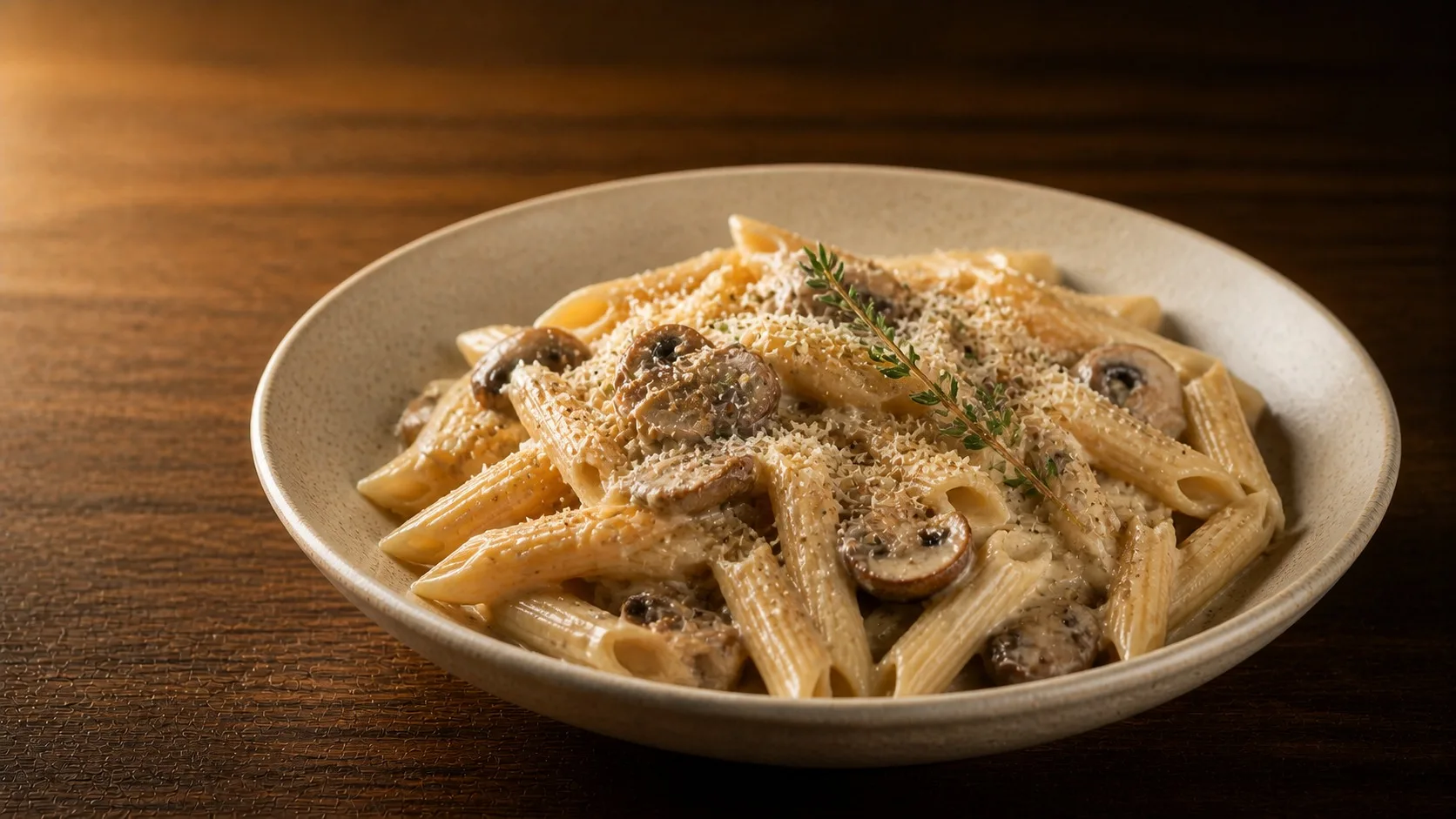
- Mechanical grip. Each ridge is a tiny shelf. Chunky sauces — bits of mushroom, sausage, peas, capers — physically catch in the grooves. They can’t slide off.
- Better mixing. When you toss penne rigate in a pan with sauce and pasta water, the ridges work like little whisks — they mix the starch and oil into a glossy emulsion faster than a smooth tube can.
If you’ve ever lost a meatball to a flat plate, you know why ridges matter.
When would lisce ever win?
There’s a slim case for smooth penne — a very fine, very oily sauce like a clear olive-oil-and-garlic dressing, where you genuinely don’t want anything to cling, and you want the sauce to slip off and re-coat with every forkful. It’s a niche choice for a specific kind of dinner.
For everything else — tomato sauces, creamy sauces, pestos, baked pastas, ragus, anything with vegetables, anything you cook for a family on a Tuesday — penne rigate is the better tube.
Why we only make the ridged version
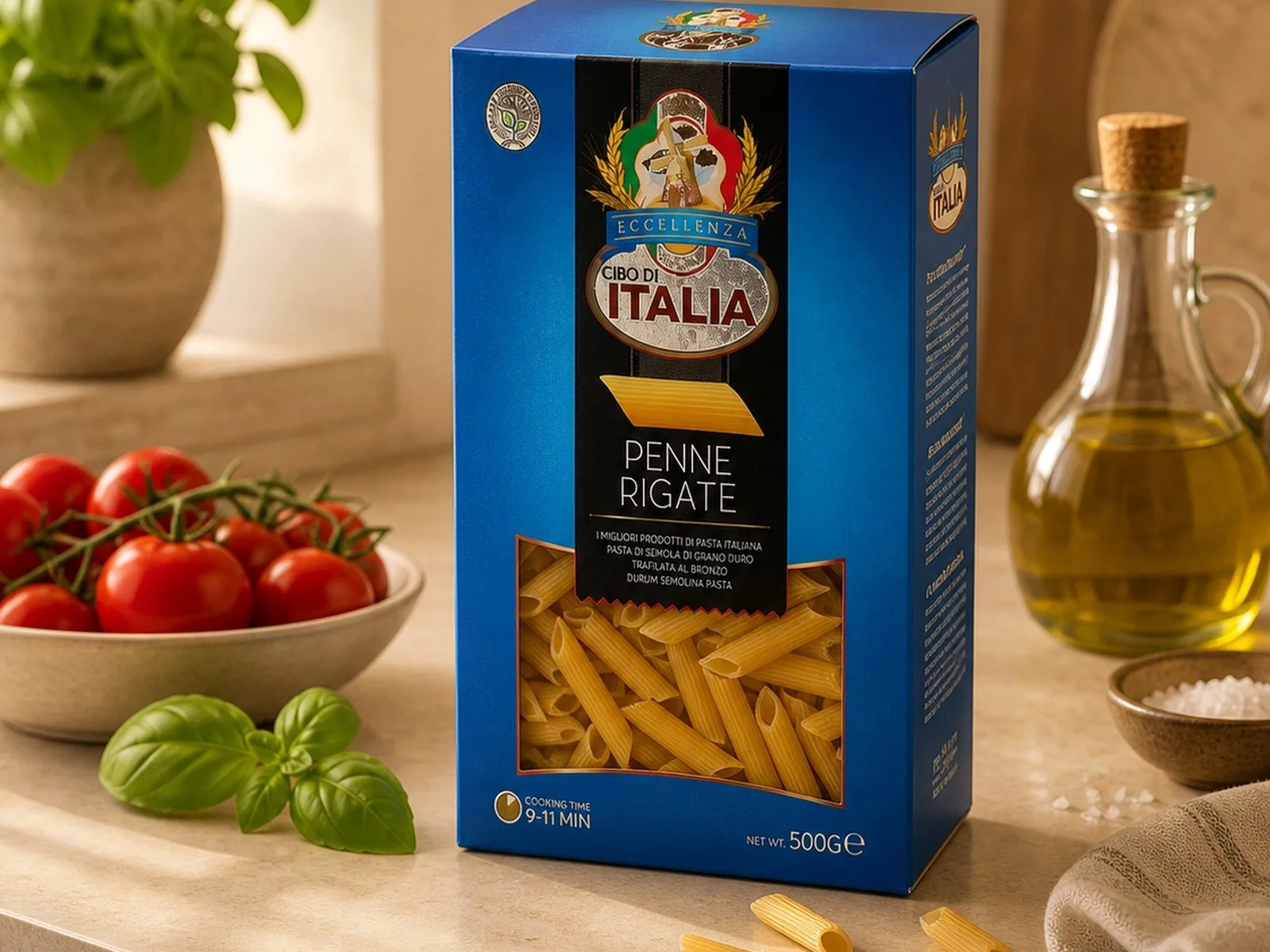
We carry Penne Rigate in our Classic range, and Gluten-Free Penne Rigate in our Gluten-Free range. We don’t carry the smooth variant. The decision is practical: home cooks are nearly always better served by the ridged tube.
It’s the same reason you’ll find Conchiglie Rigate — ridged shells — rather than smooth ones. Ridges work.
Does the gluten-free version have ridges too?
Yes. Our Gluten-Free Penne Rigate is a high-protein chickpea, brown-rice and pea-protein blend, textured through the same ridged moulds. The grooves carry sauce on a gluten-free plate exactly the way they do on a wheat plate.
How do I cook penne rigate well?
For a 500g pack of Classic Penne Rigate:
- 4 litres of water, 2 tablespoons of salt
- Drop into a rolling boil
- Cook for 9 minutes for al dente (the pack says 9–11; aim for the lower number)
- Save a mug of pasta water before draining
- Finish in the pan with the sauce for 60 seconds, adding splashes of pasta water until glossy
If you want the full method, see How to cook pasta perfectly al dente every time.
The takeaway
Ridges are the simplest, most under-explained reason your pasta either holds together on the plate or falls apart. When you reach for a tube, reach for the rigate.