Pasta 101
Whole wheat pasta vs regular pasta: what's actually different?
The short answer
Whole wheat pasta uses the whole grain — the starchy endosperm plus the bran (outer layer) and germ (the seed). Regular pasta uses just the endosperm. That single difference cascades into everything else: fibre, flavour, colour, cooking time and how it eats on the plate.
What does “whole wheat” actually mean?
A wheat kernel has three parts:
- Bran — the fibrous outer skin
- Germ — the small embryo that would become a new wheat plant
- Endosperm — the starchy interior, the largest part
Regular dry pasta is made from durum wheat semolina, which is the milled endosperm. Whole wheat pasta is made from durum wheat milled to keep all three parts in. Nothing is added; the bran and germ are simply not stripped out.
How different is the nutrition?
Real numbers, per 100g of dry pasta, rounded:
- Fibre — whole wheat: around 8g. Regular: around 3g.
- Protein — whole wheat: around 13g. Regular: around 12g.
- Iron — whole wheat tends to have 30–40% more.
- Magnesium and B vitamins — meaningfully higher in whole wheat, because they live in the bran and germ.
The protein is comparable. Where whole wheat earns its place is the fibre and the trace minerals.
What does it taste like?
Nuttier. Slightly earthier. A whisper of bitterness that disappears the moment a flavourful sauce hits it. It’s not “healthier-tasting” in a bad way — it has more flavour, not less.
Does it cook differently?
Yes, in two small ways:
- A little longer — whole wheat pasta typically wants 1–2 minutes more than the same shape in regular. Always go by the time on the pack and start tasting a minute before.
- Less forgiving when overcooked — because of the bran, whole wheat pasta has a narrower al dente window. Pull it just before you think it’s done.
The cooking method is identical: 4 litres of well-salted water per 500g, stir to stop sticking, taste a minute before the pack time, drain and toss.
Which sauces work best?
Robust, savoury, herby sauces play to the nutty flavour. Think:
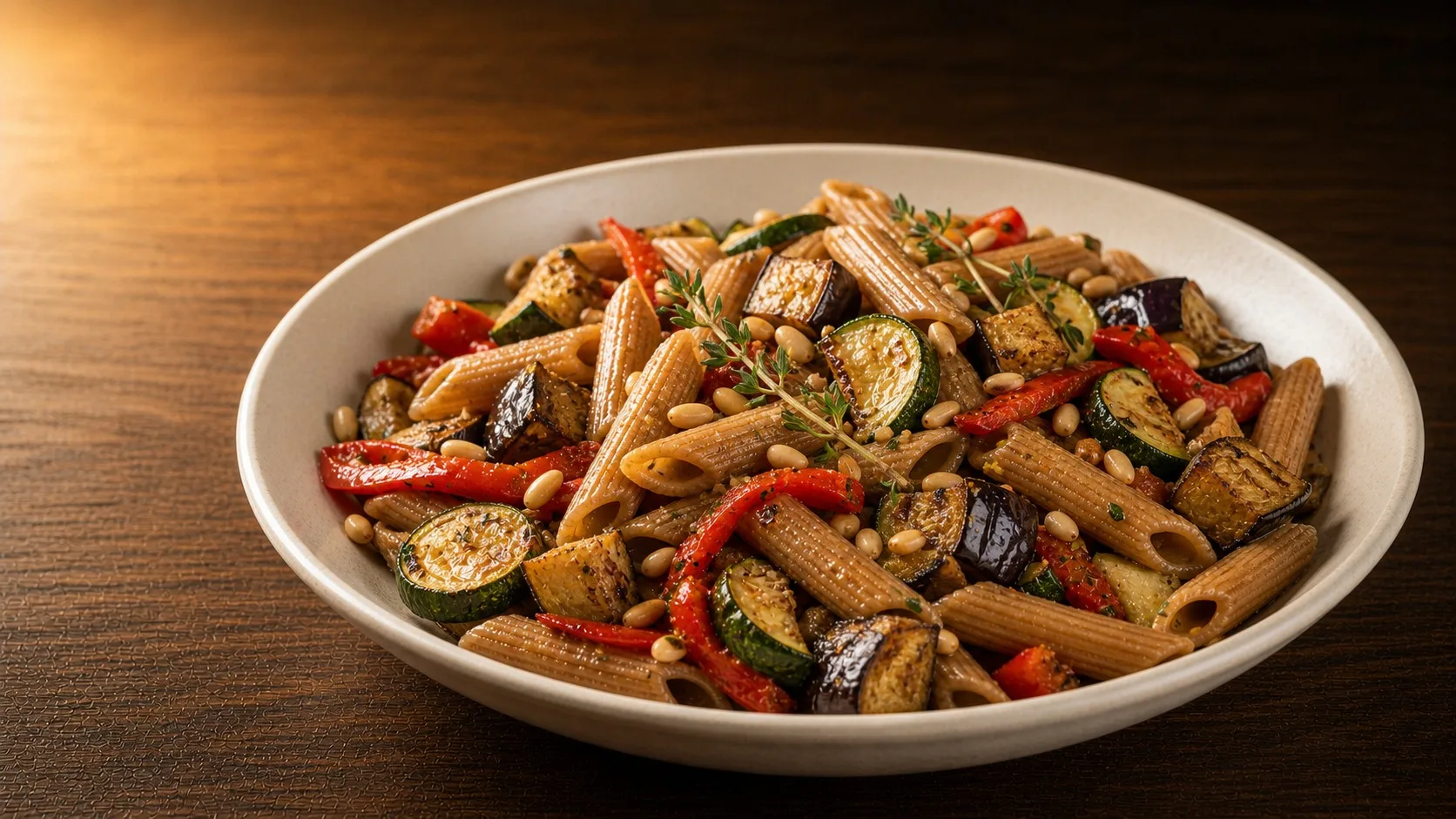
- Roasted vegetables and olive oil
- Tomato-based sauces with garlic, chilli and herbs
- Mushroom or sausage ragu
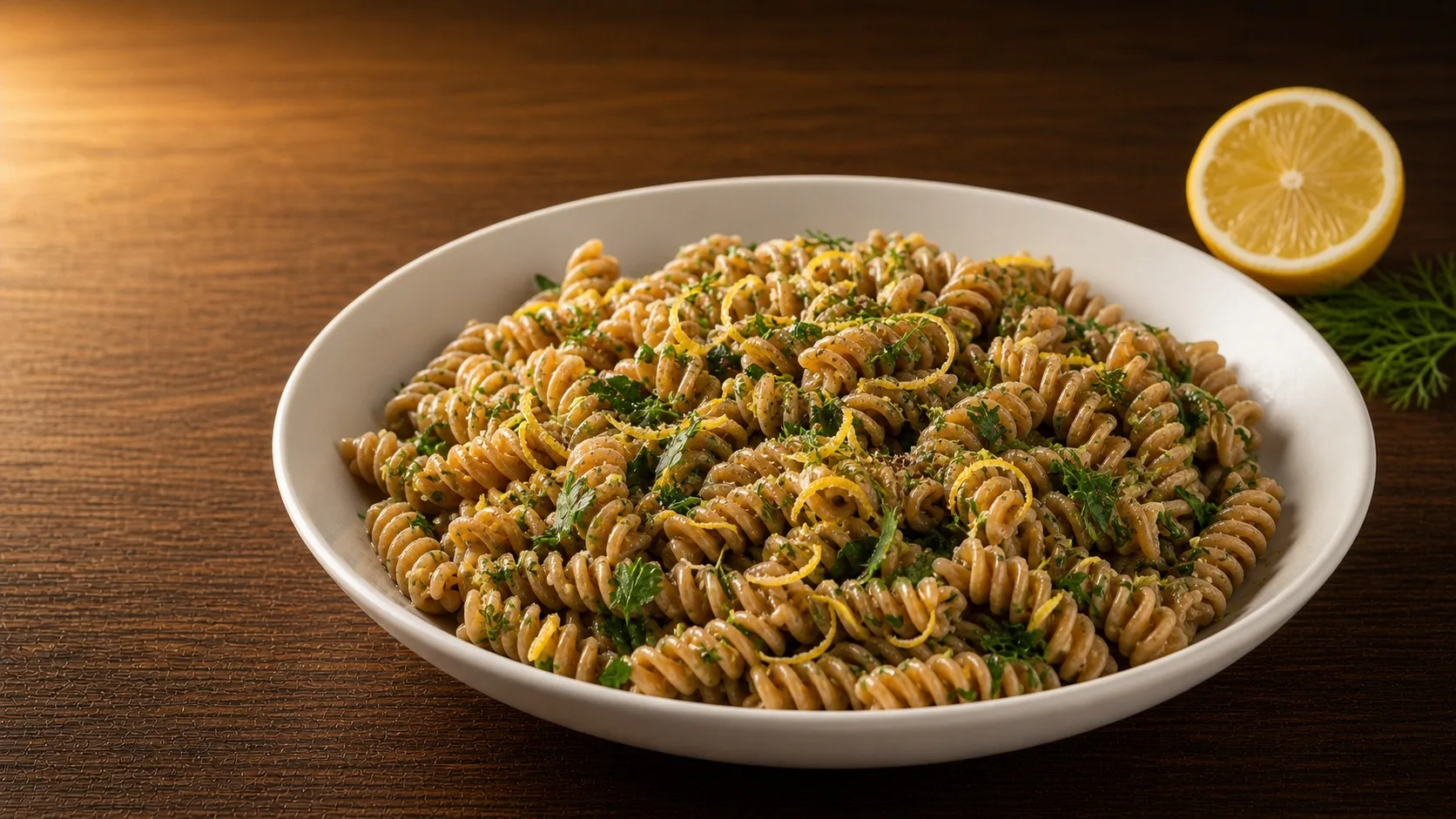
- Lemon and herb dressings (the bitterness loves citrus)
Whole wheat pasta is fantastic in pasta salads, too — it holds its bite when it cools, where regular pasta can go soft.
When would I choose regular over whole wheat?
For kids who are new to the texture, for classic creamy comfort dishes like mac and cheese, and for any time you want a neutral pasta that lets a single hero ingredient sing — a really good tomato, a fresh pesto, a delicate seafood sauce. Regular pasta is the blank canvas; whole wheat brings flavour of its own.
Is whole wheat pasta gluten-free?
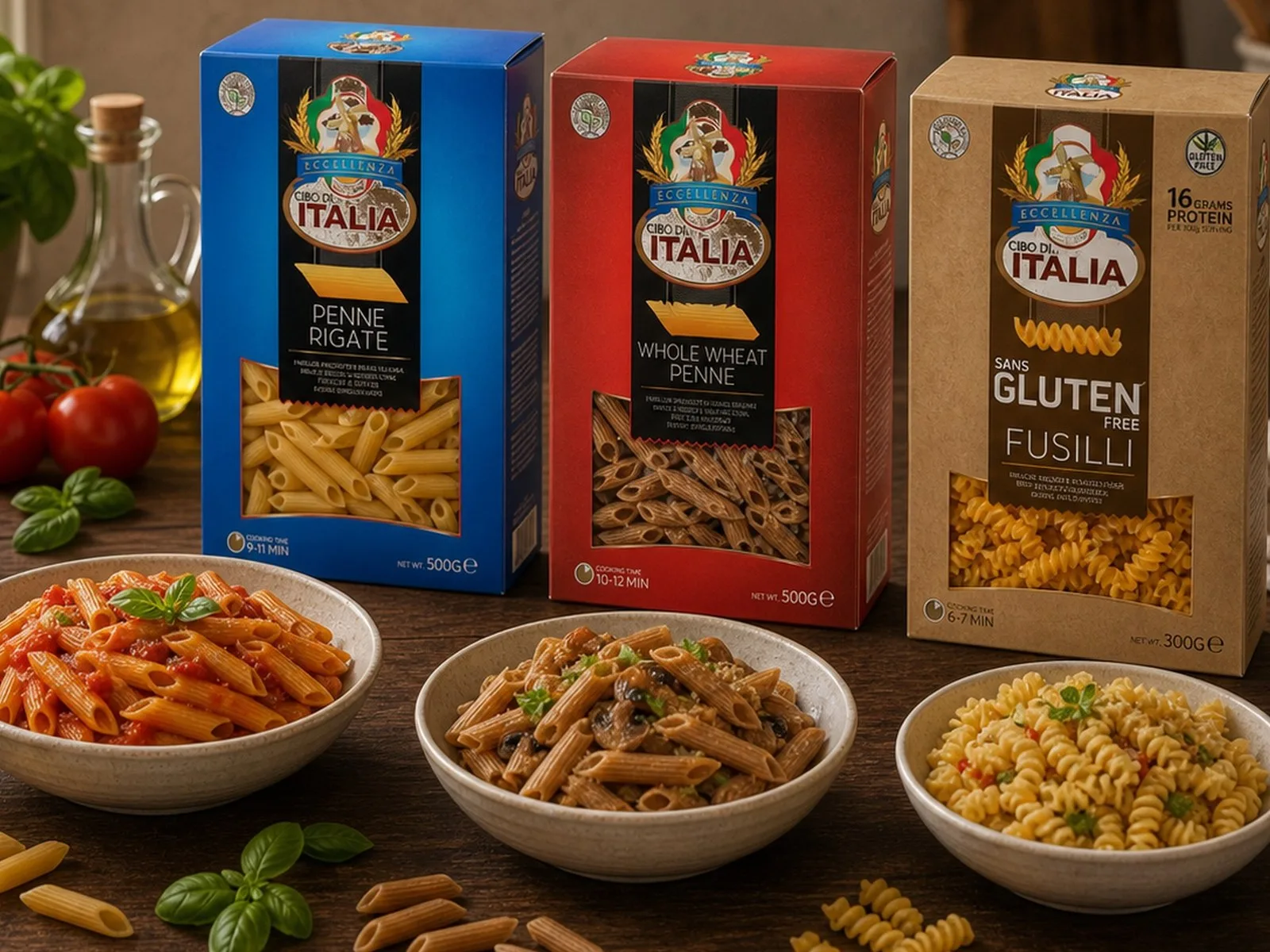
No. Whole wheat pasta has all the gluten that regular pasta has — and a bit more, since the bran has a small amount too. If you need gluten-free, look at our Gluten-Free range, which is a high-protein chickpea, brown-rice and pea-protein blend (16g protein per 100g serving) that holds al dente and works through nearly every sauce.
The takeaway
Whole wheat isn’t a “diet” version of regular pasta. It’s a different ingredient with its own strengths — more fibre, more flavour, a deeper colour, and a slightly tighter al dente window. Most family kitchens benefit from having a pack of each, ready for whatever the week’s recipes ask for.