Pasta 101
How to Make Pasta Salad That Holds Up in the Heat
Why Pasta Salad Struggles in Gulf Heat
A pasta salad that looked perfect at 11am can be a different dish by 2pm. The pasta drinks up the dressing and turns dry, the oil separates and pools at the bottom of the bowl, and anything mayonnaise-based warms past the point you’d want to serve it. None of this is really about the recipe — it’s what heat does to starch, oil, and time, and most pasta salad recipes are written for a cooler kitchen than the one you’re serving from.
The fix isn’t a different recipe. It’s a different technique applied to the one you already like. Four adjustments — how you cook the pasta, how you cool it, how you dress it, and how long you let it sit out — do almost all of the work.
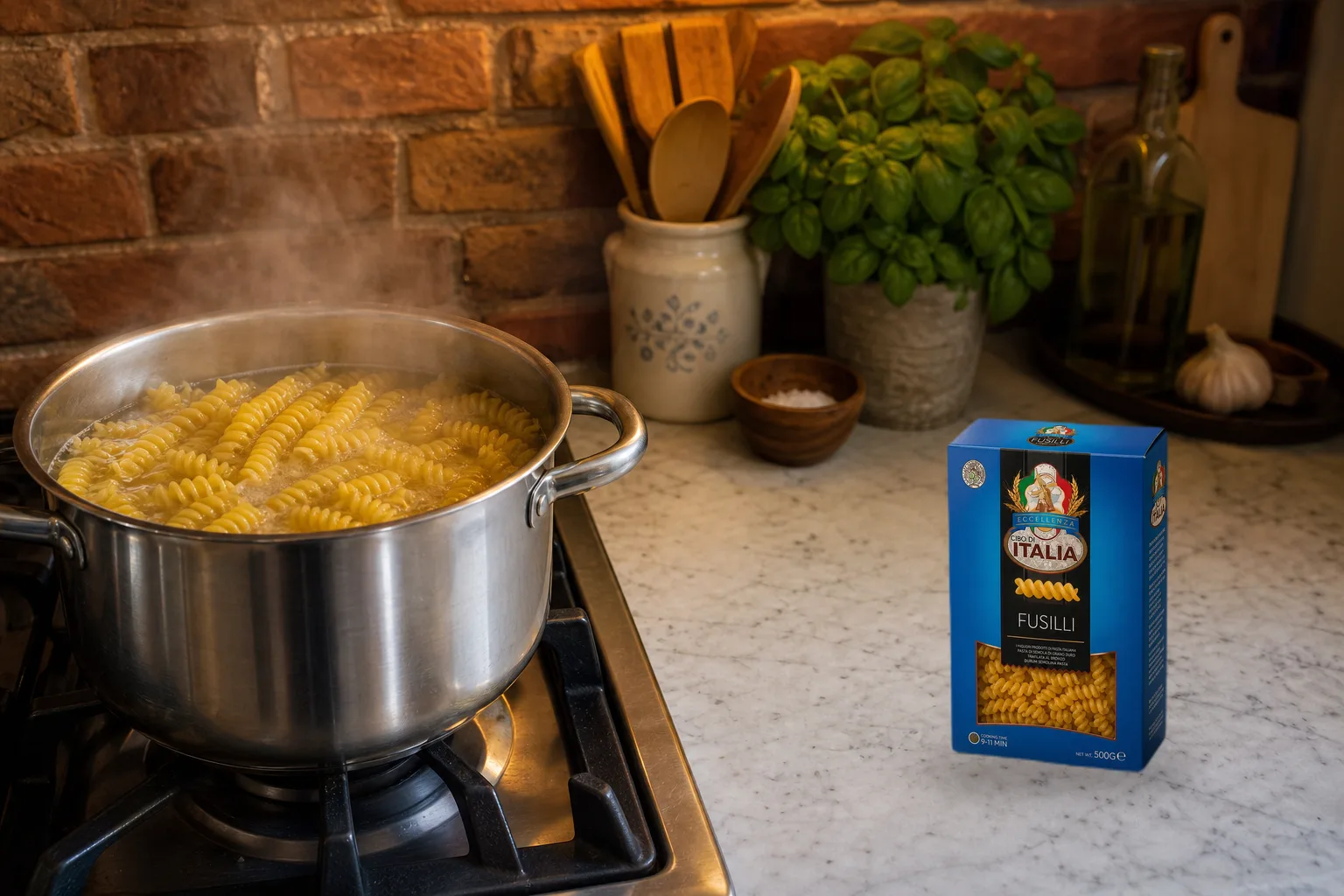
Cook It Firmer Than You Think
For a hot pasta dish, you cook to al dente and serve immediately, so a slightly soft edge barely registers. For a salad that needs to sit for hours, that same softness becomes mush by the time it’s served.
Set your timer for 60–90 seconds under the pack’s al dente guide, not just the usual one minute. Taste at that point — you want a pasta that still has real bite, almost a touch firmer than you’d eat it hot. It will continue to absorb dressing and soften slightly as it sits, and starting firmer is what keeps the final texture where you want it.
Salt the water the same way you would for any pasta — generously, so the shape is seasoned from the inside. A salad dressed only on the outside tastes flat no matter how good the dressing is.
For the fundamentals of timing and salt ratios, the al dente cooking guide covers the base method this all builds on.
The Rinse Debate, Settled
For hot pasta, rinsing is the wrong move — it strips the starch that helps sauce cling. For cold pasta salad, it’s the right one, and here’s why the two cases are different.
Rinsing under cold water does two jobs at once: it stops the cooking instantly, so the pasta doesn’t keep softening in its own residual heat the way it does in a warm pan, and it washes off the loose surface starch that would otherwise glue the pieces into clumps as they cool. A pasta salad dressed with a starchy, un-rinsed shape often sets into a solid block in the fridge. A rinsed one stays loose, piece by piece.
Run the pasta under cold water in a colander until it’s genuinely cool to the touch, not just rinsed for a few seconds. Shake off the excess water well — a wet shape dilutes the dressing and turns the whole bowl watery by the time you serve it.
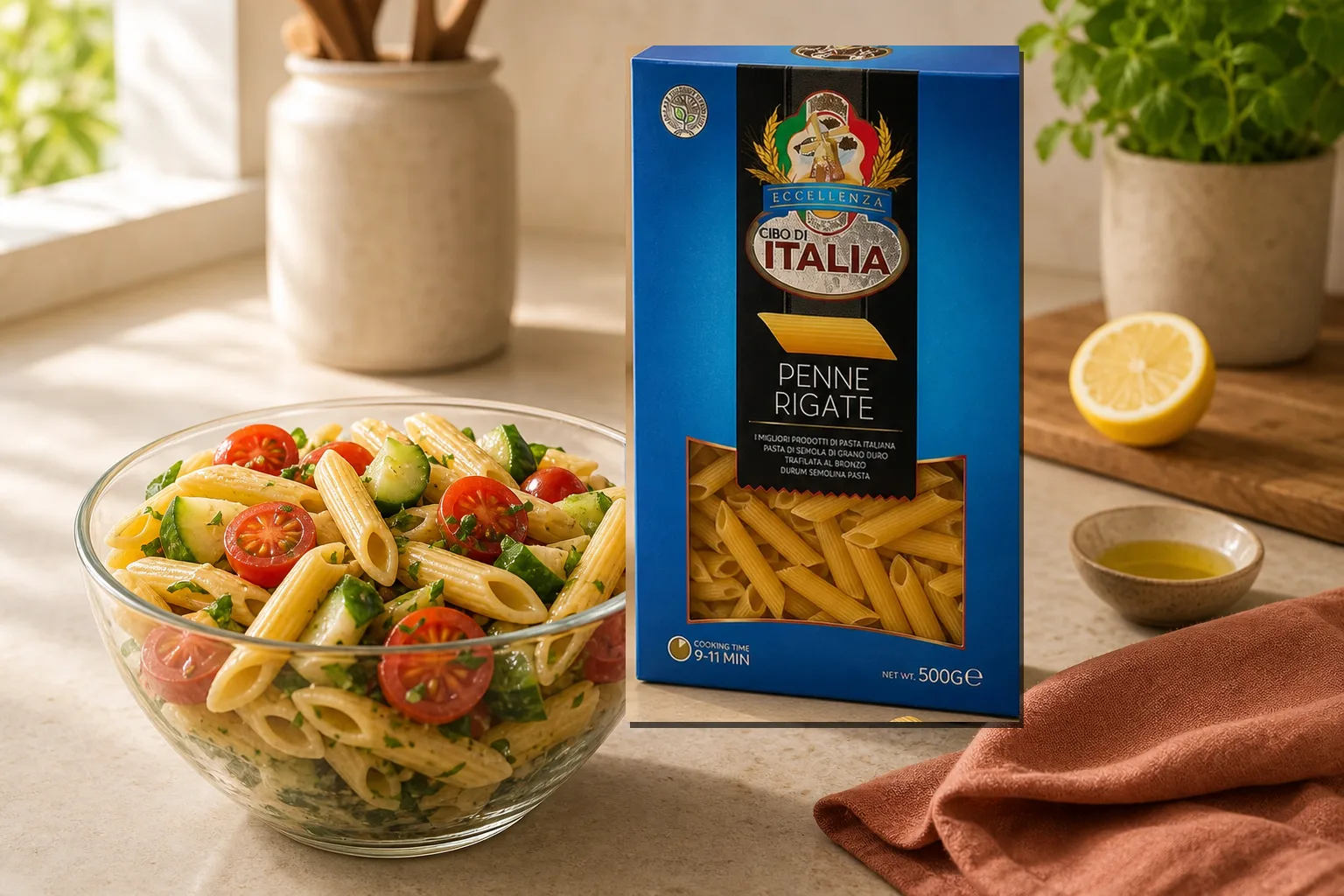
Ridged shapes handle this best
Shapes with ridges — Penne Rigate, Conchiglie Rigate — hold a coating of dressing in a way smooth shapes don’t. Once rinsed and cooled, the grooves still trap oil, herbs, and small diced ingredients, which keeps every forkful seasoned instead of leaving flavour pooled at the bottom of the bowl.
Dress It Twice
One dressing pass isn’t enough for a salad sitting for a few hours. The pasta absorbs the first hit of oil and acid almost immediately, which is exactly what you want — but it means the salad can taste bare by serving time if you stop there.
Toss the pasta with about two-thirds of the dressing while still slightly damp from rinsing, so the oil coats every piece and seals the surface. Refrigerate. Add the remaining third — plus a fresh squeeze of lemon or vinegar — just before serving, to wake the salad back up and re-coat any pieces that have dried out.
Oil-and-acid dressings (olive oil, lemon or vinegar, herbs) travel through heat far better than cream or mayonnaise-based ones, which separate and turn greasy once they warm past fridge temperature. If a creamy dressing is part of the plan, keep the salad in a cooler with an ice pack rather than on an open table, and dress it as close to serving time as possible.
The Two-Hour Rule for Gulf Heat
Once the ambient temperature is well into the 30s, treat two hours as the outside limit for any perishable dish sitting unrefrigerated — pasta salad included. It’s worth building into how you plan a lunch table, a beach trip, or an outdoor iftar spread.
A few habits make this easier to manage:
- Nest the serving bowl inside a larger bowl of ice if it’s going to be out for a while.
- Serve smaller batches, topped up from a chilled reserve, rather than putting the whole batch out at once.
- Pack it cold in an insulated bag for transport, and add nuts, crisp vegetables, or herbs that wilt in heat right before serving rather than in transit.
Reviving a Tired Salad
If a salad has been sitting for a while and looks dry, it isn’t ruined — it’s just thirsty. A drizzle of olive oil and a fresh squeeze of lemon or vinegar, tossed through gently, brings the coating back. Taste and add a pinch of salt; cold mutes seasoning, and a chilled salad almost always needs a touch more than you’d expect.
Gluten-Free Pasta Salad: What Changes
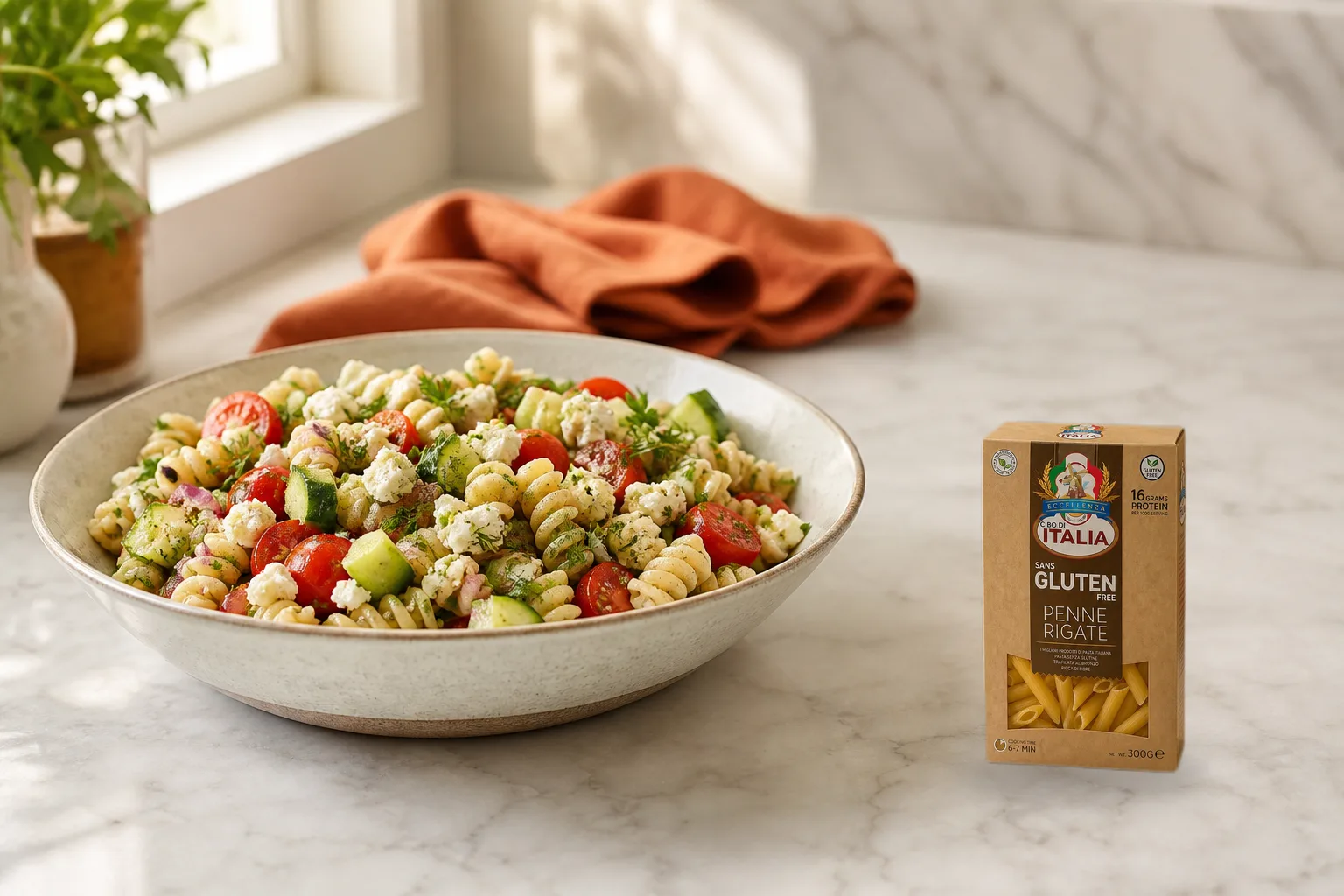
Our Gluten-Free range — made with chickpea and brown rice flour — behaves a little differently once it’s cold. It firms up more than a wheat shape does as it sits, which is generally a plus for a salad: less risk of the mush that can happen with wheat pasta left too long. Rinse it the same way, but be a touch gentler shaking off the water — the shapes are slightly more delicate wet than a classic durum shape is.
Because the al dente window is narrower on the stove, taste it a little earlier than you would a classic shape, and pull it just as it turns firm-tender. From there, the salad technique — rinse, dress twice, chill, dress again — is identical.
Browse the full gluten-free collection for salad-friendly recipes built around this range.
Put It Together
None of these four moves — firmer cooking, a proper rinse, a two-stage dress, and a two-hour clock — take extra time to plan for. They just move a step or two earlier in the process, which is the difference between a pasta salad that’s still good by the time it’s served and one that only worked in the kitchen.
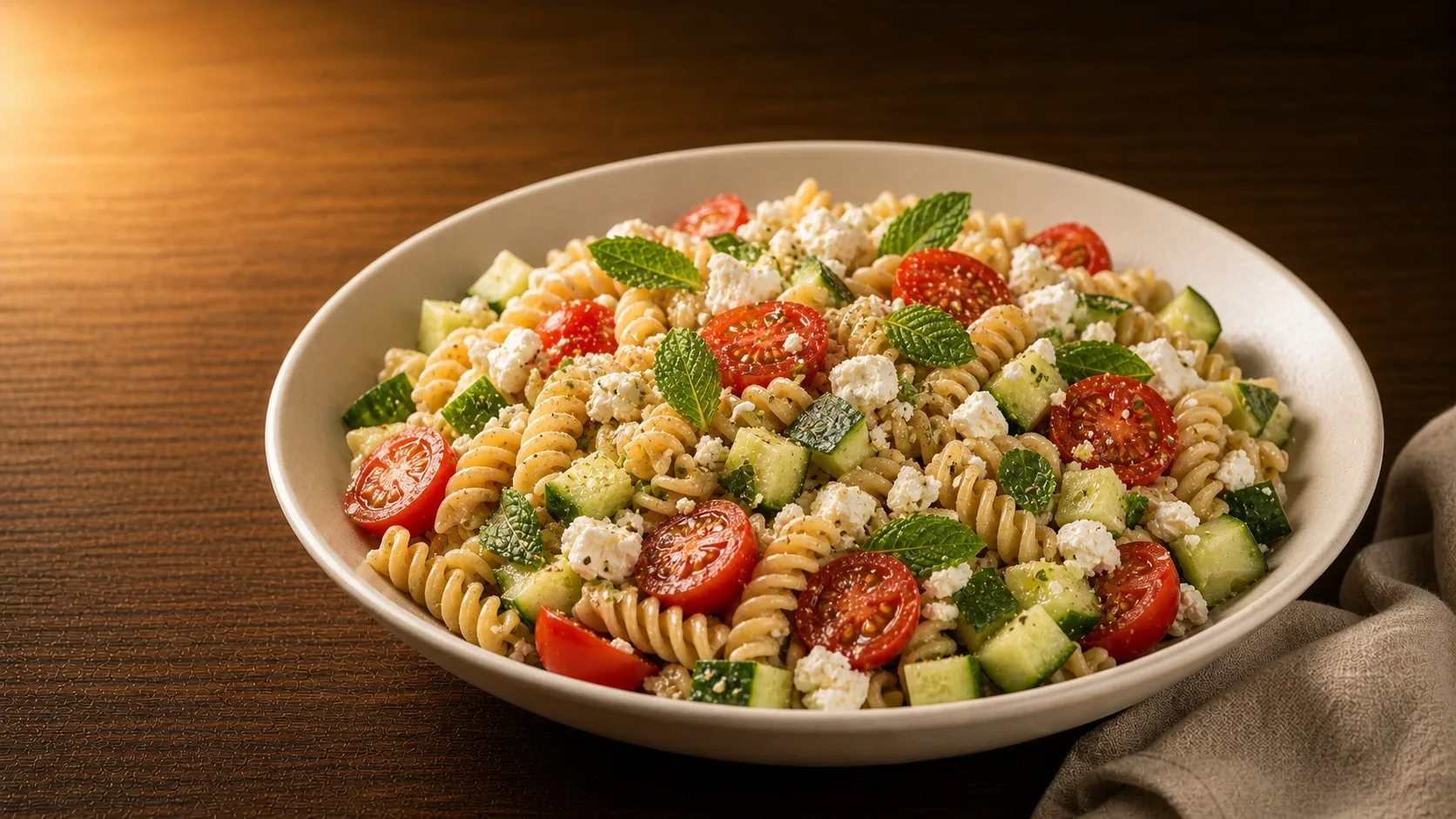
The Cold Pasta Salad with Cucumber and Feta is a good place to put the technique into practice — it’s built on exactly this method, start to finish.
FAQ
Should I rinse pasta for a salad even if the recipe doesn’t say to?
Yes. Almost every pasta salad benefits from a cold rinse after draining, even if the recipe skips the step. It stops the cooking, prevents clumping, and cools the pasta fast enough to dress it without the heat wilting fresh ingredients.
How long can pasta salad sit out at a barbecue or picnic in UAE summer?
Treat two hours as the limit once the ambient temperature is warm, and less than that in direct sun or a parked car. Keep the bowl on ice where you can, and serve in smaller batches topped up from a chilled reserve.
Why did my pasta salad turn into a solid clump in the fridge?
This usually means the pasta wasn’t rinsed, or wasn’t dressed with enough oil before chilling. Surface starch glues un-rinsed pieces together as they cool. A properly rinsed and dressed batch stays loose, piece by piece.
Can I make pasta salad the night before?
Yes, and it often tastes better the next day once the flavours settle. Hold back the final third of the dressing and add it, plus a squeeze of fresh lemon or vinegar, right before serving.
Does gluten-free pasta work for a make-ahead salad?
Yes. A chickpea-and-rice blend like our Gluten-Free range firms up nicely on standing, which suits a make-ahead salad well. Cook it slightly firmer, rinse it a little more gently than a classic shape, and follow the same dress-twice method.