Pasta 101
What pasta shape goes with what sauce? The pairing guide
The one rule
Match the texture of the sauce to the surface and shape of the pasta.
- Chunky sauces want pasta shapes with hollows and ridges to catch the bits.
- Smooth, clinging sauces want pasta with surface area to coat — ridges and curls help here too.
- Thin, slick sauces want long strands or smooth shapes that the sauce can slide along without pooling.
Everything below is just an application of that one rule.
Quick-reference pairing table
| Shape | Best with | Why | Try this |
|---|---|---|---|
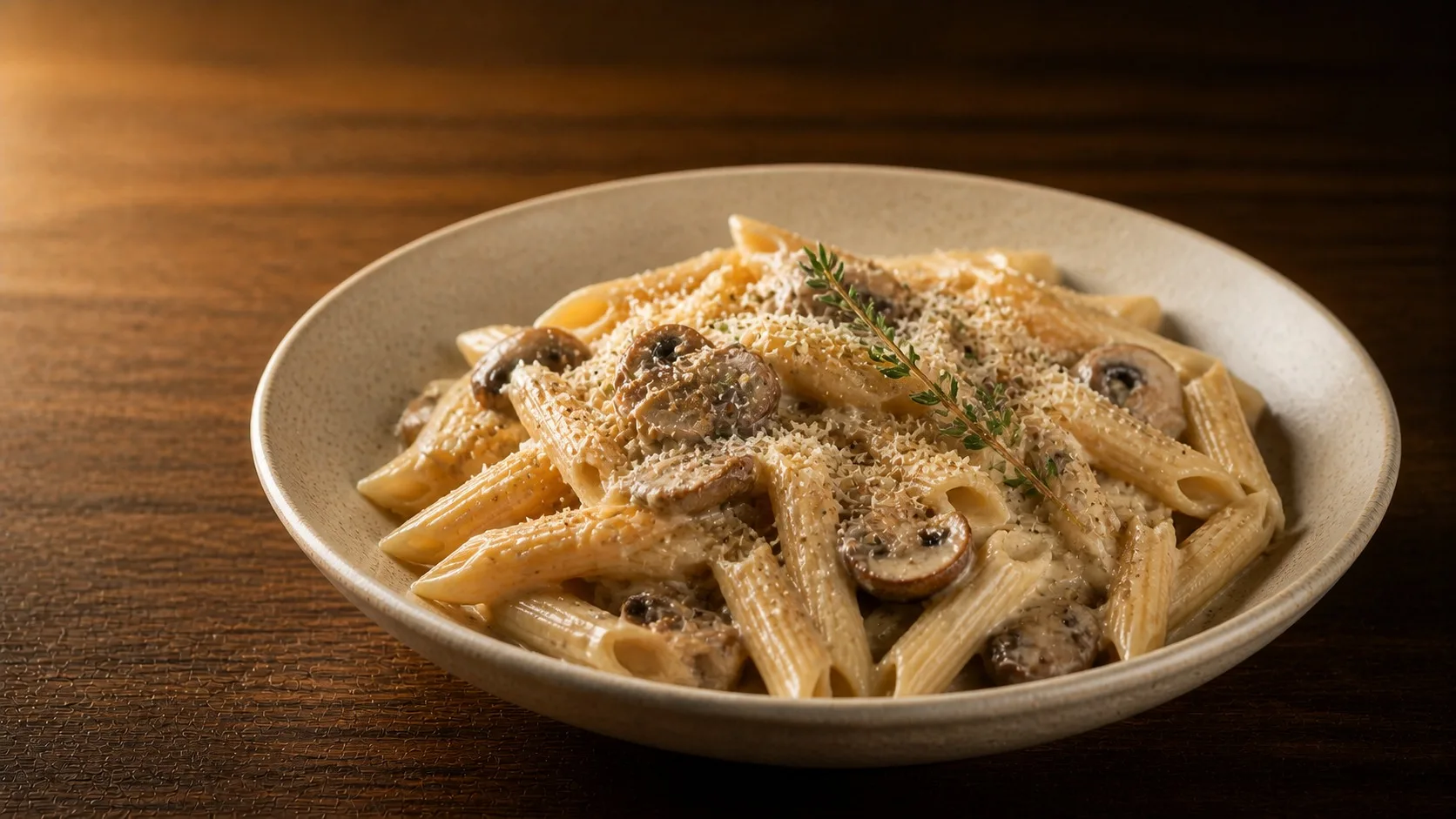
| Penne Rigate (Classic) | Tomato sauces, cream sauces, pestos, light ragus | Ridges grab everything; the hollow tube fills with sauce | Creamy Mushroom Penne |
| Fusilli (Classic) | Pesto, chunky tomato, light meat sauces, pasta salads | The twists trap small ingredients and dressing | One-Pan Garlic Fusilli with Greens |
| Macaroni (Classic) | Cheese sauces, baked dishes, simple tomato, soups | The C-shaped curve catches creamy sauces; great for kids | Classic Tomato & Basil Macaroni |
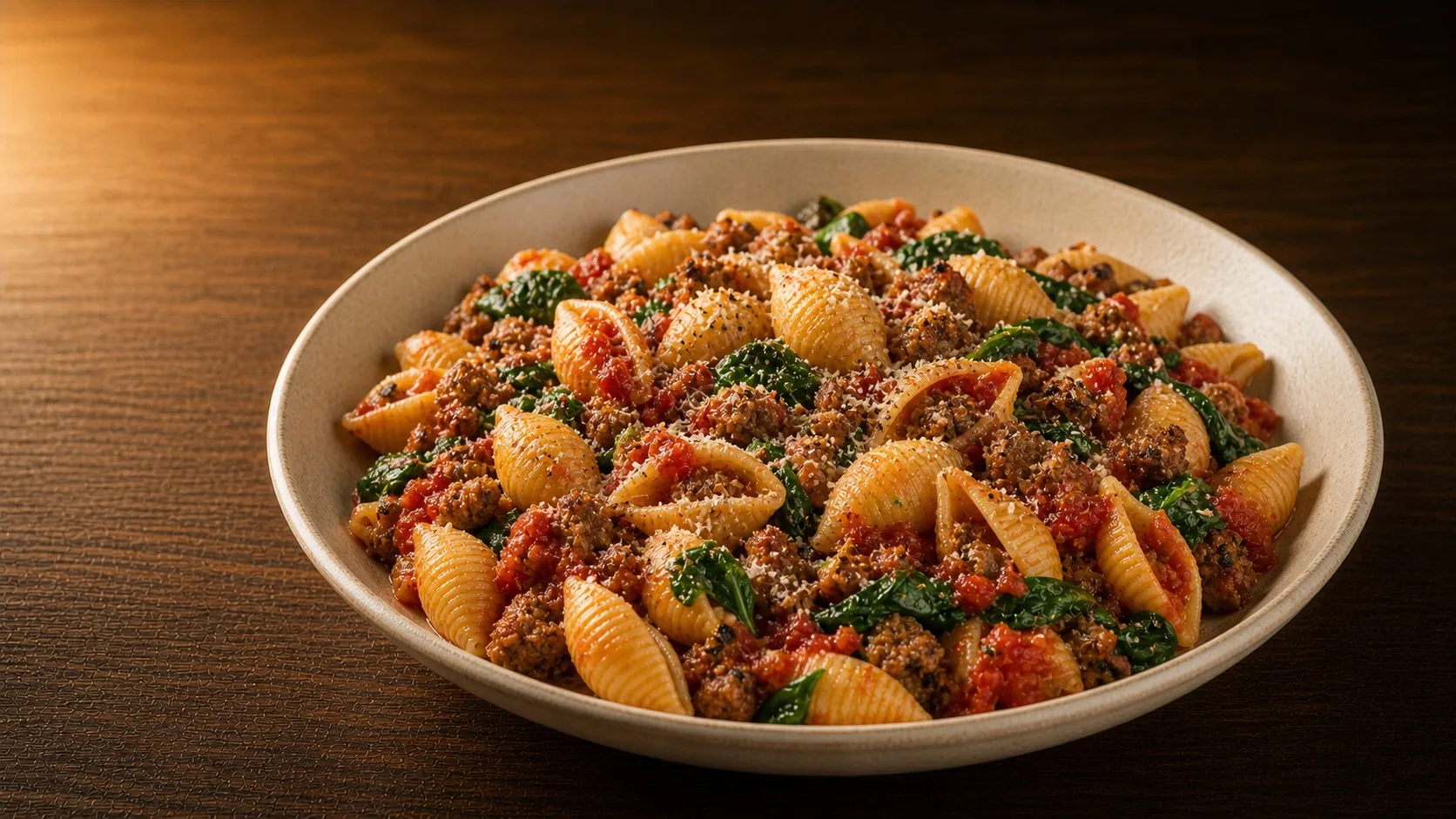
| Conchiglie Rigate (Classic) | Chunky ragu, peas and ricotta, baked dishes | The shells scoop up chunks; ridges grip cream and tomato | Loaded Conchiglie with Sausage & Spinach |
| Whole Wheat Penne | Robust tomato sauces, roasted vegetables, mushroom dishes | Nutty flavour stands up to bold, herby sauces | Whole Wheat Pasta with Roasted Vegetables |
| Whole Wheat Fusilli | Lemon-and-herb dressings, pasta salads, pesto | Twists hold dressing; flavour pairs well with citrus | Lemon & Herb Whole Wheat Fusilli |
| Whole Wheat Macaroni | Bean and lentil soups, hearty pasta stews | Small shape thickens broths; nutty wheat plays with pulses | Hearty Bean & Pasta Soup |
| Gluten-Free Penne Rigate | Pasta bakes, tomato sauces, cream sauces | Firms up on standing — ideal for bakes that hold their layers | Gluten-Free Penne Rigate Bake |
| Gluten-Free Fusilli | Cold pasta salads, lemony dressings, pesto | Twists catch dressing; gluten-free firms beautifully when cool | Easy Tuna & Olive Pasta Salad |
Penne Rigate — the all-rounder
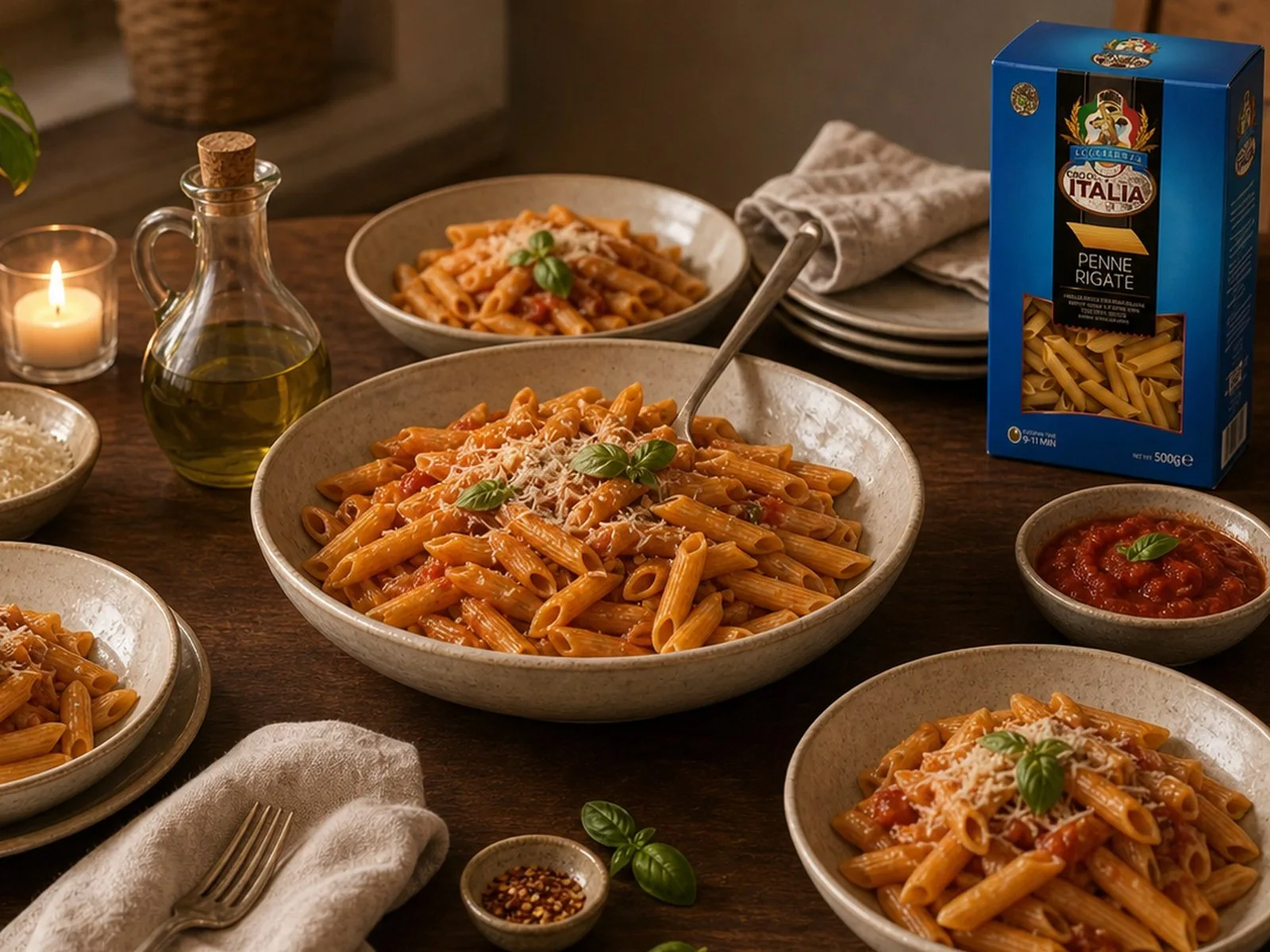
Penne Rigate is the most forgiving shape in the range. The hollow tube means every forkful contains sauce inside the pasta as well as around it. The parallel ridges on the outside catch chunky bits — onion, meat, capers — so they stay on the fork rather than falling back into the bowl.
Best sauces: tomato, cream and cheese, pesto, light meat sauces, anything with olives or capers. It’s also the go-to for pasta bakes because the tubes don’t collapse under heat.
Not ideal for: very thin, broth-like sauces where you want the liquid to coat evenly rather than pool inside the tube.
Try it in Creamy Mushroom Penne or 15-Minute Tomato Penne Rigate.
Fusilli — the twist that catches everything
Fusilli has a spiral running the length of each piece. Those spirals are the key: they create a series of small pockets that trap pesto, herbs, diced vegetables, and oily dressings that would otherwise slide off a smooth shape.
Best sauces: pesto (fusilli is the definitive pesto shape), chunky tomato with vegetables, meat sauces with finely diced or minced ingredients, and pasta salad dressings. Cold fusilli keeps its texture well and doesn’t go sticky, which makes it the best shape for salads you’re serving an hour after cooking.
Not ideal for: very rich, heavy cream sauces where you want the sauce to pool rather than get caught in the twists.
Try it in One-Pan Garlic Fusilli with Greens or as a cold salad in Easy Tuna & Olive Pasta Salad.
Macaroni — the comfort shape
Macaroni is a short curved tube. The curve means it rolls easily onto a fork and delivers a little pool of sauce inside each piece. It’s also small enough to thicken a soup or broth without dominating it.
Best sauces: cheese sauces (macaroni and cheese is a globally established pairing for a reason), tomato sauces for kids, béchamel-based bakes, and hearty soups and stews where you want the pasta to act more as a body than a centrepiece.
Not ideal for: chunky ragu or sauces with large vegetable pieces — the small tube gets overwhelmed.
Try it in Classic Tomato & Basil Macaroni or Three-Cheese Baked Macaroni.
Conchiglie Rigate — the scoop
Conchiglie Rigate is a shell shape with ridges. The hollow interior is deeper and wider than penne or macaroni, which means it physically scoops and holds chunky sauce ingredients — small pieces of meat, chickpeas, peas, ricotta — inside the shell.
Best sauces: chunky tomato-based ragus with meat or legumes, peas and ricotta, baked dishes where the shells act as little cups that hold the filling inside. The ridges also grip cream and smooth tomato sauces well.
Not ideal for: pesto or cold salads, where the shell shape retains too much dressing in the cavity and becomes heavy.
Try it in Loaded Conchiglie with Sausage & Spinach or Weeknight Conchiglie with Peas & Mint.
Why some shapes pair better than others
Three structural features do all the work.
1. Ridges (rigate) — every shape that has rigate in its name has parallel grooves. Those grooves create more surface area and physical grip. They turn any sauce into one that clings.
2. Hollows and curves — penne is a hollow tube. Macaroni is a curved tube. Conchiglie is a shell. Each shape has a cavity that fills with sauce, so each forkful comes with a little reservoir of flavour inside.
3. Twists and turns — fusilli’s spiral creates dozens of small pockets along each piece. Pesto, dressing and chopped herbs nest in those pockets. It’s the most forgiving shape for a sauce that doesn’t quite cling.
Long pasta — spaghetti, linguine, tagliatelle — has a different physics: sauce coats the length of the strand, so you want either very smooth, slick sauces (olive oil, garlic, chilli) or sauces designed to grip a thin surface (a classic creamy or tomato sauce).
We focus on short shapes because they suit how most family kitchens actually cook — quicker to plate, easier for kids, more forgiving when dinner runs late.
The three honest shortcuts
When in doubt, default to these:
- Tomato sauce → Penne Rigate. Always works.
- Cream sauce → Penne Rigate or Macaroni. The hollow holds the sauce, ridges catch the rest.
- Pesto or oil-based dressing → Fusilli. The twists are unbeatable here.
For pasta bakes, ridged tubes (Penne Rigate, Gluten-Free Penne Rigate) and shells (Conchiglie Rigate) are the dependable choices — they don’t collapse during baking and they hold up when you spoon a portion out.
What about Ramadan iftar?
A few iftar-specific shape notes:
- Soups and stews suit Macaroni or Whole Wheat Macaroni — small enough to thicken broth, large enough not to disappear.
- Cold pasta dishes for the family to graze on suit Fusilli — they don’t go sticky as they sit on the table.
- Big shareable trays and bakes suit Penne Rigate or Conchiglie Rigate — they portion cleanly with a serving spoon.
When a “wrong” pairing is fine
This guide is a starting point, not a law. Plenty of homes serve macaroni with tomato sauce, fusilli with cheese, conchiglie with anything they have. If your family likes a particular shape and you keep buying it, that’s the right pairing.
The guide matters most when you’re cooking for guests, when you want a particular dish to plate perfectly, or when you’re following a recipe and wondering if you can swap a shape. The closer the swap on the table above, the more likely it works.
The takeaway
Sauce-loving shapes are sauce-loving because of their geometry — ridges, hollows, twists. Pick the right one and the same sauce eats noticeably better. The shapes in our Classic, Whole Wheat and Gluten-Free ranges were chosen for the breadth they cover — between them, they handle nearly every weeknight dinner a family can want.
Once you’ve chosen the right shape, the next step is cooking it well. See how to cook pasta perfectly al dente for the method, and how much pasta to cook per person for the portion numbers (or use the pasta portion calculator to get the exact grams for your group).
Frequently asked questions
What pasta shape is best for tomato sauce?
Penne Rigate is the most reliable choice for tomato sauce. The ridges grip the sauce and the hollow tube fills with it, so every bite is well-coated. Fusilli also works well with chunky tomato sauces that have vegetables or small bits of meat. Macaroni is a good pick for a smooth tomato sauce served to children.
What shape should I use for pesto?
Fusilli. The spiral twists catch and hold pesto — the oil, herbs and small pieces nest in the grooves and stay on the pasta rather than sliding to the bottom of the bowl. If you don’t have fusilli, short ridged shapes like Penne Rigate are the next-best option.
Which pasta shape is best for a bake?
Penne Rigate and Conchiglie Rigate are both strong choices for pasta bakes. Penne holds its tube shape under heat and doesn’t collapse; conchiglie shells scoop up filling and hold it even when the dish is spooned out. Gluten-Free Penne Rigate is particularly well-suited to bakes because the chickpea-rice-pea blend firms up as it sits, giving the dish clean layers.
Can I swap pasta shapes in a recipe?
Usually yes, if you stay within the same structural category. Fusilli can swap for Penne Rigate in most tomato or cream sauces. Macaroni can swap for Conchiglie Rigate in soups and lighter bakes. The pairing gets trickier when you move between hollow tubes and twist shapes for very thick, chunky sauces — the sauce may not cling the same way — but for most home cooking, the swap will be fine.
Does pasta shape affect cooking time?
Yes. Larger, thicker shapes take longer to cook than small or thin ones. Among the Cibo di Italia range, Macaroni is quickest (pack time 8–10 min), while Conchiglie Rigate and Whole Wheat Penne take the longest (10–12 min). Always use the time on the pack as a starting point, and taste 1 minute early for al dente. See the al dente cooking guide for the full timing table.