Pasta 101
Best pasta brand in the UAE: an honest buyer's guide
Start with what actually matters on the label
Every pasta brand on a UAE supermarket shelf will tell you it’s good. Few of them tell you how to judge that. Here are the things worth actually looking at:
Durum wheat semolina — full stop. The ingredient list on any decent dry pasta should start with durum wheat semolina (sometimes labelled “semola di grano duro”). If you see plain wheat flour, soft wheat flour, or a blend that leads with something other than durum, the pasta will cook soft and lose its shape faster. All the brands covered in this guide use durum wheat semolina in their standard ranges, which is the baseline you need.
Texture on the outside. Hold a piece of dry pasta up to the light. A slightly rough, matte surface grips sauce better than a perfectly smooth, glossy one. The rougher finish comes from the texture of the die through which the pasta is extruded. It’s a real functional difference — not a marketing one.
Shape selection matters for what you cook. If you mostly cook saucy weeknight dishes, ridged shapes (penne rigate, conchiglie, fusilli) catch more sauce than smooth ones. Macaroni is the family multipurpose — works in soups, bakes, and simple tomato dishes.
Pack size and format. Most brands sell 500g packs of standard shapes. Gluten-free ranges tend to come in smaller packs (300g is common) because they’re positioned as a speciality product. Keep that in mind when comparing price — always work out cost per 100g, not per pack.
The main brands you’ll find in the UAE
Barilla
The world’s best-selling pasta brand, and for practical reasons. Barilla is widely available across UAE supermarkets, reliable in quality, and priced in the mid-range. It covers the full breadth of shapes, and the standard range cooks consistently. The surface is smoother than some premium alternatives, which some cooks notice in heavily sauced dishes. Barilla also offers a gluten-free line (maize and rice based) and a wholegrain range. A safe, dependable choice.
De Cecco
A step up in price from Barilla, and generally noticeable in the texture. De Cecco uses a rougher finish on its pasta, which translates to better sauce grip. It’s a favourite among home cooks who care about the detail. Availability in the UAE is good at larger supermarkets and specialty food stores. Worth the extra dirham if you’re cooking a dish where the pasta surface matters — a simple olive oil and garlic pasta, for example.
Garofalo
Less widely distributed than Barilla or De Cecco but increasingly visible in UAE specialty and premium supermarkets. Garofalo produces a notably rough-surfaced pasta with good al dente retention. If you come across it, it’s worth trying, particularly for recipes where you want the pasta to carry a thin, oil-based sauce rather than a thick ragù.
Panzani
Panzani has a strong presence in North Africa and the Middle East and shows up reliably on UAE shelves, often at a competitive price point. It’s a practical everyday pasta — the durum quality is solid and it cooks predictably. The range is narrower than Barilla’s. Good value for families cooking high-volume meals.
La Molisana
La Molisana has grown in visibility in the UAE over the past few years. The pasta has a good reputation for texture and a noticeably rougher surface finish on many shapes. It sits in the premium segment and is worth seeking out if you find it.
Cibo di Italia
We make Cibo di Italia for UAE families, so we’ll be direct: we’re not the most widely distributed brand in the country yet. But we make three distinct ranges, and one of them is genuinely difficult to find elsewhere on UAE shelves.
Our Classic range (durum wheat semolina, 500g) covers the everyday shapes: Penne Rigate, Fusilli, Macaroni and Conchiglie Rigate. Reliable, consistent, priced for everyday cooking.
Our Whole Wheat range (stone-milled whole durum, 500g) is for households who want more fibre and a nuttier flavour in their everyday pasta. More on the whole wheat vs regular question in our dedicated guide.
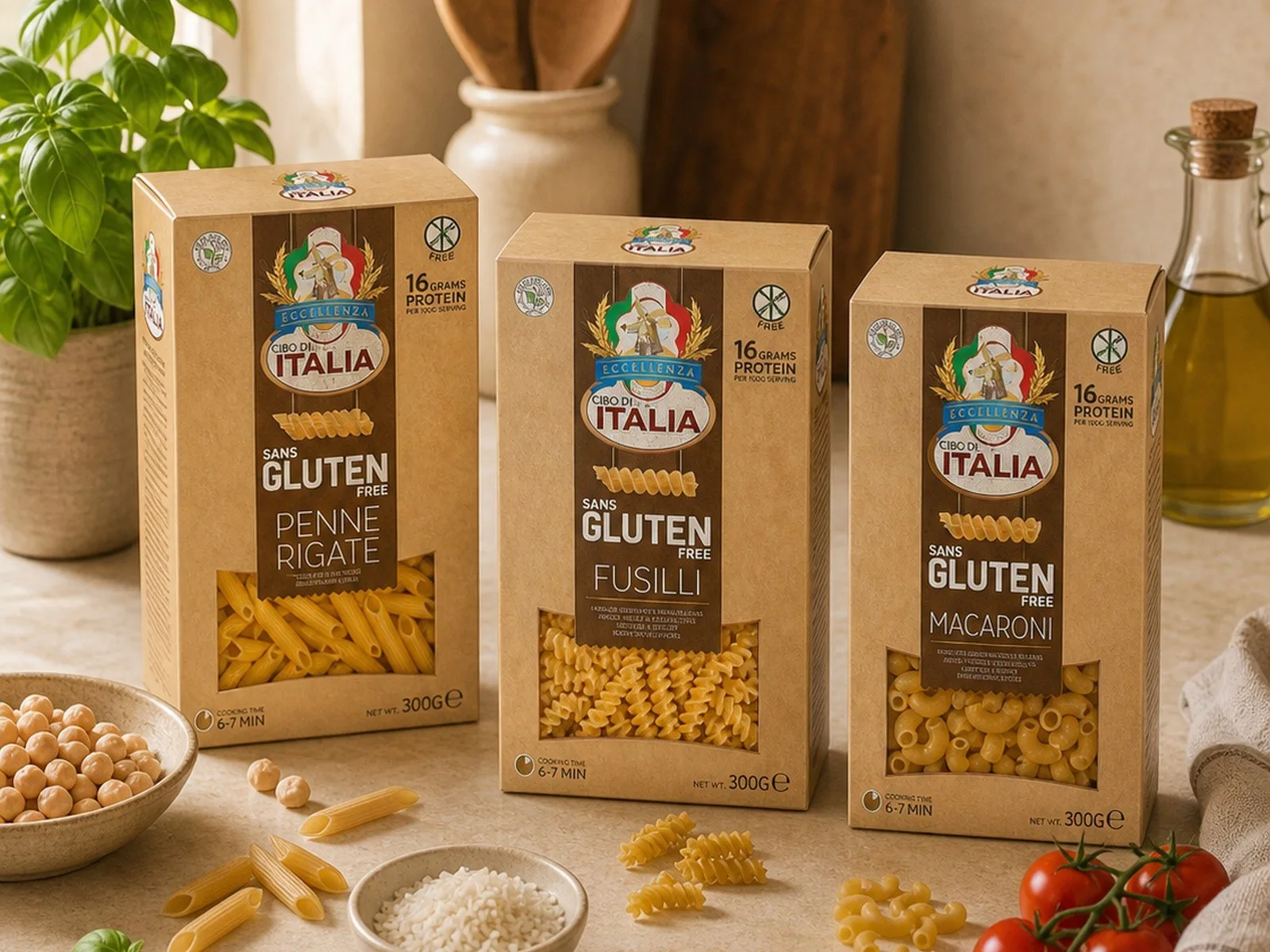
Our Gluten-Free range is where we’ve invested the most. It’s a chickpea flour, brown rice flour, tapioca starch and pea protein blend — 16g of protein per 100g, gluten-free, and built to hold al dente the way a good pasta should. In a market where most gluten-free pasta is a plain maize-rice blend with low protein, this is a meaningfully different product. It comes in 300g packs. Read more about our gluten-free range here.
How to choose: a quick framework
For everyday weeknight cooking with no dietary requirements: any of the brands above will serve you well. Barilla and Panzani offer the widest availability and good value. De Cecco and La Molisana are worth the higher price if texture matters to you.
If you want more fibre and flavour without switching entirely: a whole wheat pasta from any brand, or Cibo’s Whole Wheat range. Best with robust sauces rather than delicate ones — the flavour is nuttier and more assertive than the regular version.
If someone in your household needs to avoid gluten: the gluten-free options divide sharply. Standard maize-rice blends are widely available. A high-protein legume-based blend (like Cibo’s Gluten-Free range) is harder to find and cooks more like wheat pasta. See our full comparison of gluten-free pasta options, and read more about what high-protein pasta is if that’s a factor in your household.
If you’re cooking for protein-conscious eaters: not all pasta is equal here. Standard wheat pasta sits around 12–13g protein per 100g. A chickpea-based gluten-free pasta like Cibo’s lands at 16g per 100g, which is meaningfully higher.
If you’re watching budget: Panzani and Barilla are the most accessible price points. All brands in this guide use durum wheat, so the quality floor is decent — you’re mainly trading on texture and availability above the baseline.
Where to buy in the UAE
All the brands above are available across major UAE supermarket chains. Specialty and gourmet supermarkets carry the fuller range from De Cecco, Garofalo and La Molisana. Cibo di Italia is available through select UAE stockists and online.
The honest bottom line
There isn’t one best pasta brand in the UAE — there’s the best pasta brand for your household. If you’re cooking for a family with mixed needs (some gluten-free, some not, some wanting more protein), having two or three different packs on the shelf makes more sense than settling on a single brand. Most UAE kitchens would be well served by a standard durum pasta for everyday nights, a whole wheat option for more nutritious midweek meals, and a gluten-free pack for when you need it.
For cooking tips that apply to any brand you choose, see how to cook pasta perfectly al dente.