Pasta 101
High-protein pasta explained: what it is, who it's for, how to cook it
What “high-protein pasta” actually means
Standard dry pasta made from durum wheat semolina carries around 12–13g of protein per 100g. That’s not negligible — pasta has always been a reasonable source of plant protein — but it’s mostly a carbohydrate-led food.
High-protein pasta is pasta where some or all of the durum wheat has been replaced with a flour that’s naturally richer in protein. The main candidates are legume flours: chickpea, red lentil, green pea, or black bean. Some products blend legume flour into wheat; others are entirely legume-based and are therefore naturally gluten-free.
Protein per 100g can reach 16–25g depending on the blend, which puts it noticeably above wheat pasta and in the range of a modest protein supplement — without the powders.
The most common high-protein pasta types
Chickpea pasta
Chickpea flour is the most widely used legume base for high-protein pasta, for a few good reasons. Chickpeas have a mild, faintly nutty flavour that doesn’t overwhelm a sauce. They carry around 19–20g of protein per 100g as a flour, and the resulting pasta typically lands at 14–17g of protein per 100g finished product.
Chickpea pasta is inherently gluten-free, which makes it doubly useful for households that need both higher protein and gluten-free eating.
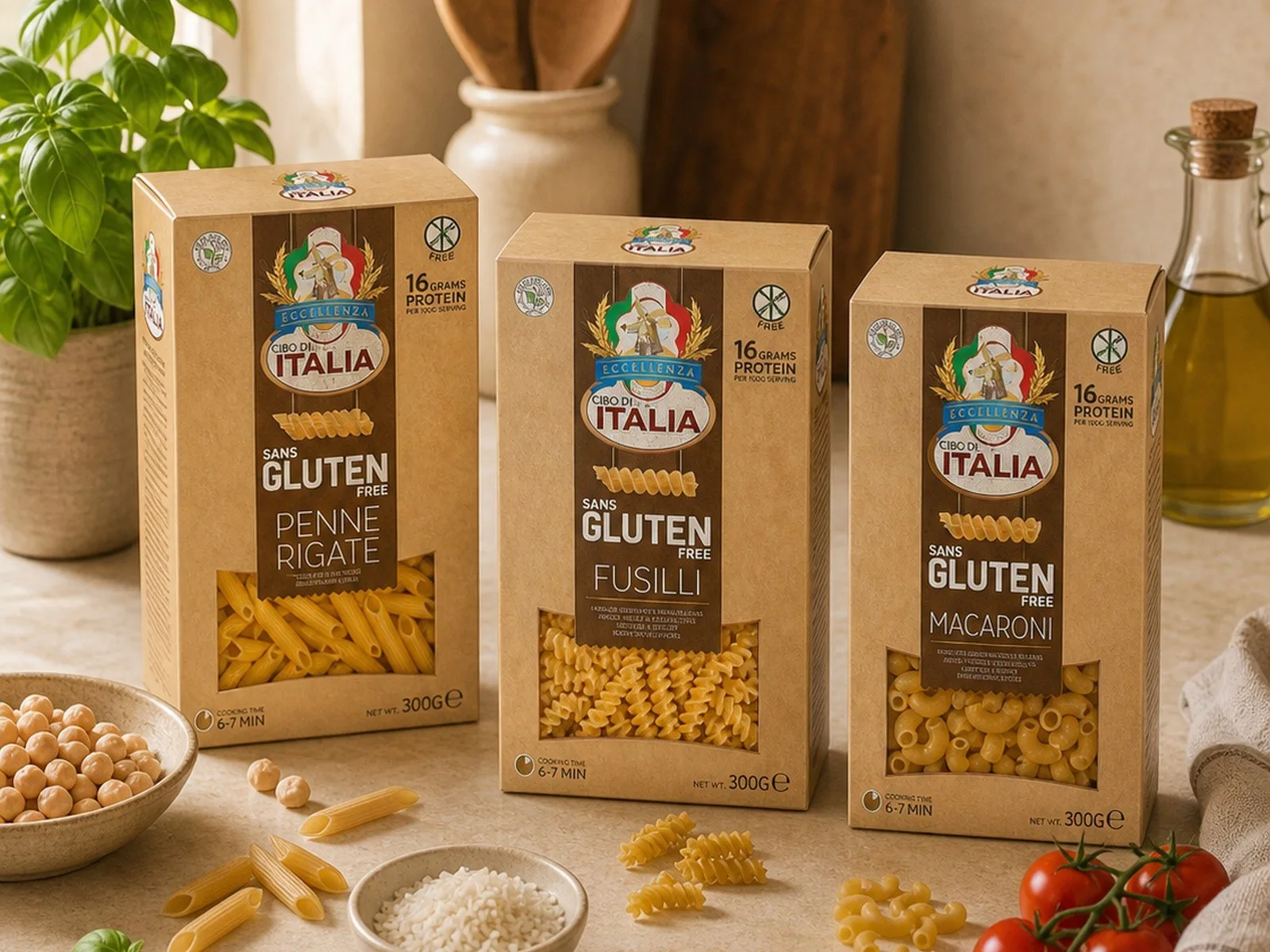
Our Gluten-Free range uses chickpea flour as the primary ingredient, blended with brown rice flour, tapioca starch and pea protein. The result is 16g of protein per 100g — a meaningful step up from standard wheat pasta with a texture and flavour that work across the same range of sauces.
Lentil pasta
Red lentil pasta is another common option. It tends to have a slightly earthier flavour and a more reddish colour. It’s also gluten-free and protein-rich, typically around 13–15g per 100g. The texture can be slightly more delicate than chickpea pasta.
Pea protein pasta
Some products blend pea protein isolate directly into wheat pasta rather than replacing the wheat flour entirely. These remain gluten-containing but raise the protein content. Less common in the UAE market.
Edamame and black bean pasta
More niche options, primarily available online. Higher protein (up to 25g per 100g for pure black bean pasta) but a stronger flavour that doesn’t suit every sauce. Worth trying if you’re specifically chasing protein numbers and don’t mind the flavour profile.
How the protein compares: a reference table
| Pasta type | Protein per 100g (approx.) |
|---|---|
| Standard durum wheat | 12–13g |
| Whole wheat pasta | 13–14g |
| Chickpea pasta (e.g. Cibo GF range) | 16g |
| Red lentil pasta | 13–15g |
| Black bean pasta | 20–25g |
These are dry-weight figures, which is the standard way to measure — the water absorbed during cooking dilutes the number per gram of cooked pasta.
Who high-protein pasta is actually for
Active households and families with higher protein needs. If you’re cooking for people who exercise regularly, you’re often looking for easy ways to raise protein across the day without adding a dedicated protein meal. A pasta dinner that delivers 16g protein per 100g instead of 12g is a painless way to close that gap — especially if you pair it with a protein-rich sauce (chicken, chickpeas, eggs).
Households managing gluten intolerance or coeliac disease. Most legume-based high-protein pastas are naturally gluten-free. For families where one member can’t eat wheat pasta, switching the whole household to a chickpea or lentil pasta removes the need to cook two separate pots. The protein advantage is a bonus.
People reducing refined carbohydrates. Legume-based pasta has a lower glycaemic index than standard wheat pasta, partly because the protein and fibre slow digestion. It’s not a carb-free product — chickpea pasta still contains significant carbohydrate — but the digestion profile is gentler. More on the glycaemic angle in our article on whether chickpea pasta is good for you.
Older children and teenagers with high protein needs. Growing kids often need more protein than their diets supply easily. A chickpea pasta dinner that looks and tastes like ordinary pasta is a practical solution that sidesteps the “I don’t want a protein shake” conversation.
What high-protein pasta is not for
It’s not a weight-loss product in itself. The calorie count of chickpea pasta is comparable to wheat pasta — roughly 340–370 kcal per 100g dry. If your goal is reducing total calories, pasta quantity matters more than pasta type.
It’s also not a replacement for dietary variety. Pasta is one protein source among many; it works best as part of a balanced plate alongside vegetables, pulses, dairy or meat.
How to cook chickpea-based pasta well
The technique is close to wheat pasta but with two adjustments worth knowing:
Use plenty of water. Chickpea and rice flour pastas release more starch into the cooking water than wheat pasta. A minimum of 4 litres for a 300g pack keeps the water loose enough that the pasta doesn’t gum together.
Watch the window carefully. Legume-based pasta has a narrower al dente window than durum wheat — about 60 seconds separates firm-tender from soft. Start tasting one minute before the pack time and stop the moment the centre is just cooked through.
Don’t rinse after draining. The starch on the surface of the pasta is what makes the sauce cling. Rinsing strips it away.
Finish in the sauce with pasta water. A splash of the starchy cooking water in the pan, tossed with the sauce and pasta over heat for 30 seconds, makes a properly emulsified finish. Same technique as wheat pasta, same benefit.
For a complete walkthrough of the cooking technique that applies to any pasta, see how to cook pasta perfectly al dente.
Is chickpea pasta suitable for a gluten-free household?
Yes — with the caveat that you need to check the allergen statement on the packaging. Not all legume-based pastas are produced in dedicated gluten-free facilities; some share equipment with wheat pasta and carry a cross-contamination risk. Our Gluten-Free range is made with chickpea and brown rice flour, with no wheat in the recipe.
Read more about how our gluten-free pasta compares to regular wheat pasta in our honest comparison guide, and for the full nutritional picture, see is chickpea pasta good for you.
Buying high-protein pasta in the UAE
The high-protein pasta category is growing on UAE supermarket shelves, but the range is still limited in many stores. The majority of gluten-free options are plain maize-rice blends with lower protein (around 4–7g per 100g). If protein content matters to you, check the label rather than relying on the “gluten-free” or “healthy” front-of-pack claims — those don’t tell you the protein story.
Cibo di Italia’s Gluten-Free range (chickpea flour base, 16g protein/100g) is available through select UAE stockists and online. The shapes available are Penne Rigate, Fusilli and Macaroni.
The takeaway
High-protein pasta is a genuinely useful product for active households, families managing gluten intolerance, and anyone who wants more protein without adding a separate food group to their day. The chickpea-based version is the most practical for everyday cooking — mild enough to work with almost any sauce, protein-rich, and gluten-free as a natural result of the ingredient, not as an afterthought.
For a buying comparison of all the pasta brands available in the UAE — including protein considerations — see our UAE pasta brand buyer’s guide.