Pasta 101
Is chickpea pasta good for you? An honest nutrition look.
The short, honest answer
Chickpea pasta is nutritionally better than standard wheat pasta in several measurable ways. It has more protein, more fibre, more iron, and a lower glycaemic impact. It’s also naturally gluten-free.
But — and this is worth saying clearly — it is still a pasta. It’s not a low-carb product. It’s not a medical food. The nutritional advantages are real and meaningful for a family eating pasta two or three nights a week; they won’t compensate for an otherwise poor diet. If someone has a specific medical condition, the right person to ask about that is a doctor or dietitian, not a pasta brand.
With that said, here’s what the nutrition actually looks like.
Protein: the most significant difference
Standard durum wheat pasta: around 12–13g of protein per 100g dry.
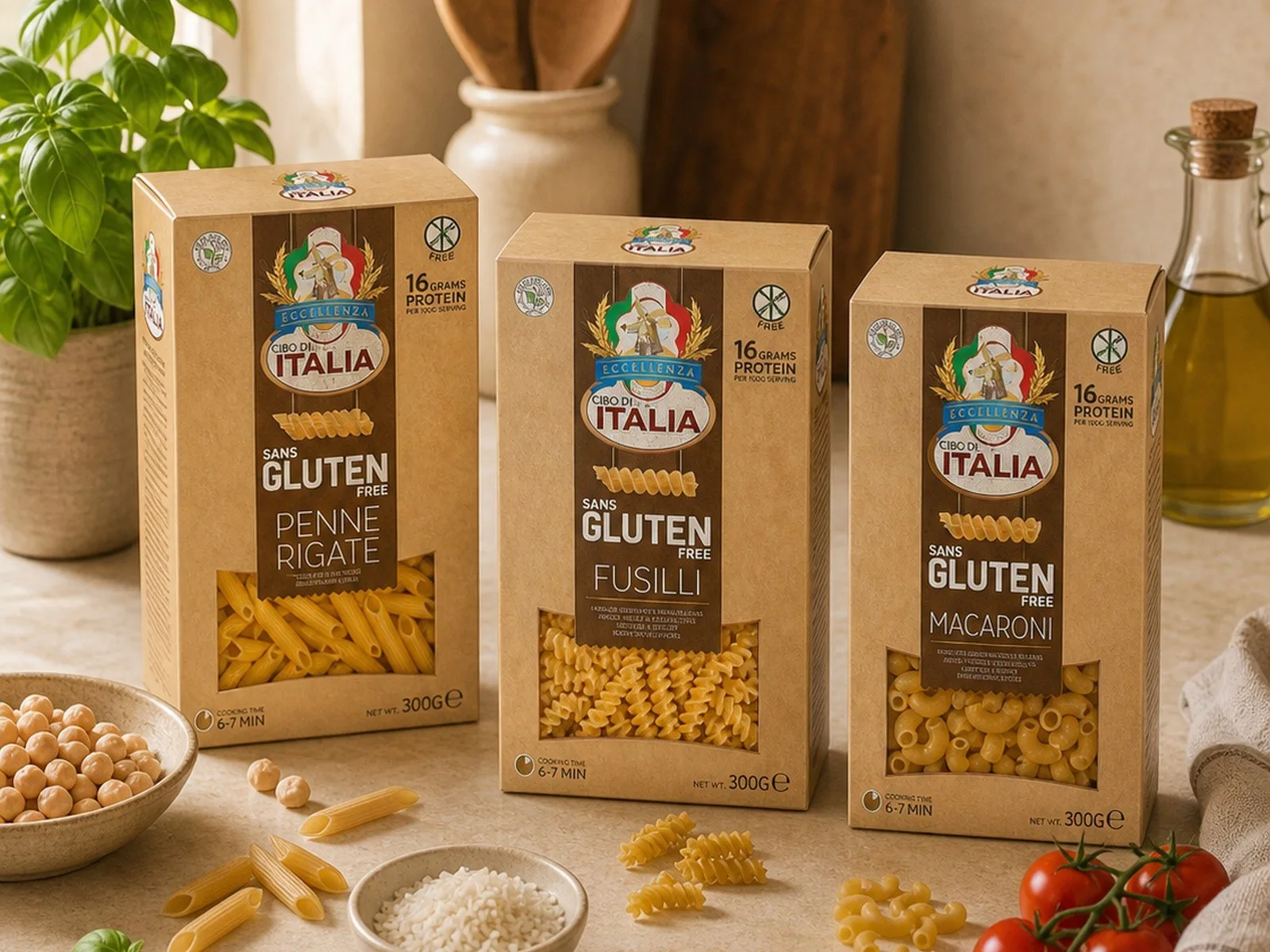
Chickpea pasta (e.g. Cibo di Italia Gluten-Free range): 16g of protein per 100g dry.
That’s a 25–30% increase, which is a meaningful difference at the dinner table. For a 90g serving of dry pasta (a standard adult portion), that’s roughly 14–15g protein from the pasta alone, before you add a protein-rich sauce. For a family with active teenagers, athletes, or anyone trying to eat more protein without overhauling their entire diet, that difference compounds across every pasta night.
The protein in chickpea pasta is also a good amino acid profile — not identical to meat or eggs, but broader than wheat protein, partly because pea protein (often included in the blend) rounds out the amino acid picture.
Our Gluten-Free blend carries 16g protein per 100g because it combines chickpea flour and pea protein alongside the brown rice flour and tapioca starch that give the pasta its texture and structure. For a deeper look at how the protein compares across pasta types, see our full guide to high-protein pasta.
Fibre: genuinely higher
Chickpeas are naturally high in dietary fibre, and that fibre carries through into chickpea pasta. A chickpea-based pasta typically carries around 5–8g of fibre per 100g dry, compared to around 3g in standard wheat pasta (and around 7–8g in whole wheat pasta).
Fibre matters for satiety — the sense of being full that keeps you away from snacks between meals — and for digestive health. A pasta dinner built on chickpea pasta is more filling per gram than a dinner built on standard pasta, which is practically useful if you’re cooking for hungry eaters on a budget.
Glycaemic impact: lower, but not low
Chickpea pasta has a lower glycaemic index (GI) than standard wheat pasta. The legume base digests more slowly than refined wheat starch. Blood glucose rises more gradually, which means a more sustained energy release rather than a spike-and-crash pattern.
This is genuinely useful for people managing blood sugar. However, some important nuances:
The portion size still matters. Glycaemic index is measured for a fixed carbohydrate amount, not a fixed weight of food. A large bowl of chickpea pasta will still affect blood sugar significantly. People managing diabetes or prediabetes should speak with their healthcare provider about appropriate portion sizes, not assume chickpea pasta is a free pass.
It’s not a low-carb product. A 100g dry serving of chickpea pasta still contains around 45–55g of carbohydrate. The carbohydrate is digested more slowly, but it’s still there.
Cooking time affects GI. Overcooked pasta — whether wheat or chickpea — has a higher GI than al dente pasta. One more reason to pull it from the pot while it still has bite. See how to cook pasta perfectly al dente for technique.
Gluten-free: for whom does it actually matter?
Chickpea pasta is naturally gluten-free. This is significant for two groups:
People with coeliac disease cannot eat gluten without triggering an immune response that damages the small intestine. For them, checking the label isn’t a preference — it’s a requirement. Cibo’s Gluten-Free range is gluten-free pasta made with chickpea and brown rice flour; always check the allergen statement on the pack.
People with non-coeliac gluten sensitivity report symptoms — bloating, discomfort, fatigue — after eating gluten-containing foods, though the mechanism is less clearly understood. For this group, a switch to gluten-free pasta can reduce symptoms noticeably.
For everyone else, the gluten-free status of chickpea pasta is neither a benefit nor a drawback. Gluten in wheat pasta is not harmful for people who aren’t sensitive to it. “Gluten-free” is not a synonym for “healthier” in a general sense — the nutrition of chickpea pasta is better than wheat pasta for other reasons (protein, fibre), not because it’s gluten-free.
If you want an honest comparison of how gluten-free pasta cooks and eats compared to wheat pasta, see is gluten-free pasta as good as regular.
Vitamins and minerals
Chickpeas are a good source of iron, magnesium, folate and zinc. These carry through into chickpea pasta, typically at higher levels than standard wheat pasta. The exact amounts vary by brand and specific blend.
Worth noting: plant-based iron (non-haem iron) is absorbed less efficiently than iron from meat. Eating a source of vitamin C alongside (e.g. tomato sauce, a side salad) improves absorption. This isn’t unique to chickpea pasta — it applies to all plant iron sources.
How Cibo di Italia’s Gluten-Free blend works nutritionally
Our Gluten-Free range is built on a four-ingredient blend:
- Chickpea flour — the main ingredient; provides the protein backbone and the faintly nutty base flavour.
- Brown rice flour — provides the neutral starchy base that lets sauces taste of themselves. Mild in flavour.
- Tapioca starch — a binder that helps the pasta hold shape during cooking and gives the surface enough body to grip sauce.
- Pea protein — added specifically to raise the protein content and round out the amino acid profile.
The nutritional outcome: 16g protein per 100g, gluten-free, higher fibre than standard wheat pasta.
A note on what chickpea pasta won’t do
We want to be straightforward about this. Chickpea pasta is not a treatment for any medical condition. It is not a detox product. It is not a supplement. It is pasta made primarily from chickpeas, with a better nutritional profile than wheat pasta in three specific areas (protein, fibre, GI).
The best outcome from switching to chickpea pasta is that your family’s pasta nights are a little more nutritious without requiring any different cooking technique or any sacrifice of enjoyment. That’s a meaningful practical win — not a cure for anything.
Is chickpea pasta good for children?
Yes, with no caveats for healthy children. It cooks the same way as wheat pasta, tastes mild enough that most children don’t notice the difference (particularly with a flavourful sauce), and provides more protein and fibre than the standard alternative. For children who need to avoid gluten, a gluten-free chickpea pasta is a straightforward substitute that doesn’t require a separate meal.
The takeaway
Chickpea pasta has a genuinely stronger nutritional profile than standard wheat pasta — more protein, more fibre, lower glycaemic impact, naturally gluten-free. These are real advantages, not marketing ones. The honest limits are equally real: it’s still a carbohydrate food, the portion size still matters, and it won’t compensate for an unbalanced diet.
For most UAE families eating pasta regularly, swapping a standard wheat pasta for a well-made chickpea blend is a straightforward nutritional upgrade that costs nothing in terms of cooking effort or dinner table enjoyment.
For the full picture on high-protein pasta types and how to cook them, see high-protein pasta explained. To compare pasta brands available in the UAE, including nutritional factors, see our UAE pasta brand buyer’s guide.